Looking From Outside to Fix What’s Inside
To fully enjoy reading this post, listen to Blade Runner End Titles by Vangelis
Here we are, this is the first notable achievement that humanity reached on the way to evolve into spacepolitans, let’s break the ice.
Listening and reading around for my quest, I met the thoughts of a genial mind, George I. Gurdjieff.
One of his ideas really impressed me: to rationally begin this (please refer to the book Views from the Real World to see what’s “this” is referring to) cleaning, it is necessary to see what needs to be cleaned, where and how; but seeing it for yourself is almost impossible. In this field, to grasp anything, it is necessary to observe from the outside: this is why mutual help is indispensable.
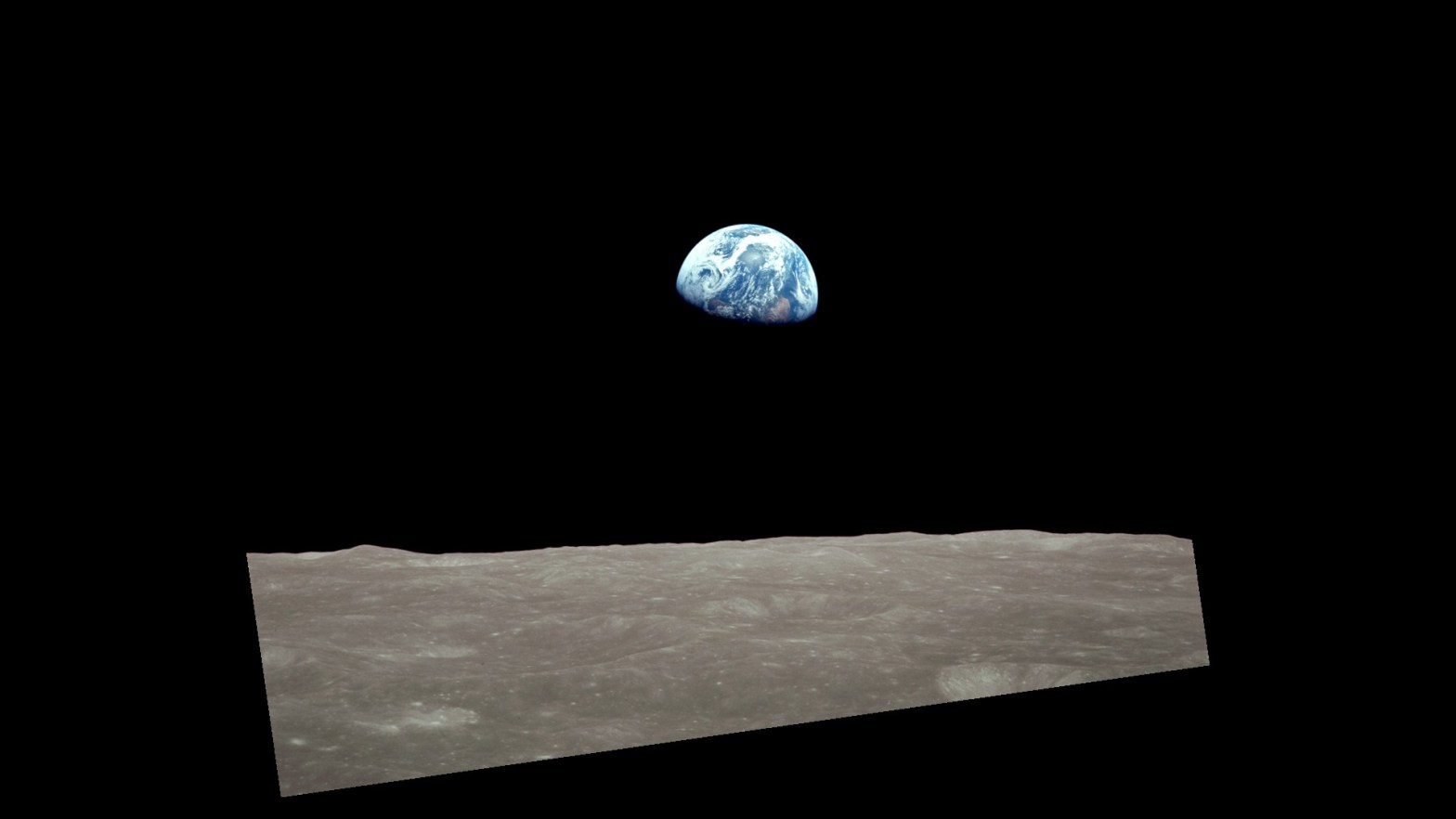
Reading this concept reminded me immediately of the famous picture Earthrise, “the most influential environmental photograph ever taken”, as Nature photographer Galen Rowell declared. Looking at the Earth from Outer Space has been one of the most important “Oh Wow” moments for humanity, finally leading to the initial development of an ecologically aware movement: going into space began to prove tremendously useful for the Earth.
Since that picture taken in 1968, many other systems were developed to look at the planet from space, with the aim to provide many different perceptions from the outside and to learn what was happening on it.
One of the most ambitious Earth observation programs to date is Copernicus, from the European Space Agency. Thanks to the Sentinel satellite fleet, it provides accurate, timely and easily accessible information to improve environmental management, to understand and mitigate the effects of climate change, for a safer and more sustainable future.
If we look towards the other side of the Atlantic, NASA is running a similar program, called NASA Earth Science, with the mission to use Earth observations to solve our planet’s most pressing issues.
In which ways are programs like these enriching our awareness of environmental issues? Some examples are the clear pictures of glaciers retreat and of sea level rise or, more recently, the drastic reduction of pollution emissions due to Covid19 lockdown and to many human activities forced to a halt.
Hence these pictures and the data retrieved through Earth observations from space are increasing day by day the evidence of our impact both negatively and positively (usually to remedy human mess).
Do we need a clearer example? Ok, I have a very good one, a true success story. Let’s take a look at what happened to the Ozone depletion discovery, made in 1985. Researches about the impact of an industrial synthesis product (chlorofluorocarbons or CFC) on Earth ozone layer started in the 70’s and in 1985 it was officially stated that CFCs were the main cause of the ozone layer depletion in those years. Among the most decisive proofs, the measures carried out by NASA satellite Total Ozone Mapping Spectrometer (TOMS) not only confirmed those researches, but also showed a hole more extended than expected. Thanks also to these evidences, 197 UN countries unanimously ratified the Montreal Protocol on Substances That Deplete the Ozone Layer in 1987 and, after years of application of that protocol, UN finally issued a scientific assessment in 2018 about the ozone hole recovery, facts testified by orbiting instruments like NASA HALOE or ESA ERS-2.
I’m sure you got the point now and this is just the first evidence that Space is essential to save our species, the first of a long list! I will reveal another one in my next blog entry. Stay tuned and let’s become spacepolitans!
 Becoming Spacepolitans
4 thoughts on “Observing Earth From Space”