Spaceplanes, reusability and a look at the future
To fully enjoy reading this post, listen to Breakthru by Queen.
Reaching space on top of a powerful rocket and aboard a spacecraft is a consolidated human activity that has been continuously done in the last fifty years, as detailed in my previous two posts, Travel to Space (1/3) and Travel to Space (2/3). But there is another way and what an amazing one!
Last time I wrote about the Space Shuttle, an extraordinary vehicle launched vertically to space, clinging to a mighty rocket. The Shuttle was technically a spaceplane, since it was able to fly, glide and land as an airplane through the Earth’s atmosphere and to maneuver as a spacecraft in space. Although reused after every mission, the rocket was destroyed every time and this waste was causing every mission to be too expensive.
How to fix the budget issue of sending humans to LEO? Two concrete solutions have appeared until now and they are currently on their way to become serviceable:
- making rockets reusable (who said “SpaceX”?)
- use the Drop Launch testing method for standard operations
Let me describe the second one, since I already talked about the first one in my last entry (remember the Crew Dragon and the Falcon 9?).
The Drop Launch, or Drop Test, is a method very well known in aviation, since it has allowed to test several experimental aircrafts. One of the most popular is the North American X-15, operated by NASA and the US Air Force. In a few words the X-15 was a hypersonic aircraft, very similar to a missile, with a rocket engine. It was sent into the sky attached to a modified B-52 aircraft and, once it reached the height of 13.7 km, it was released from the mothership. After a few second its powerful rocket engine was started, allowing it to reach the hypersonic speed of Mach 6.7, unbroken speed record for an aircraft so far. During his various missions, it was able to reach regularly the 80 km height (space limit for the US Air Force) and it was also able to overcome twice the Karman Line (100 km height or space limit for the UN).
Thanks to the X-15 Program, the Drop Launch itself proved to be a very affordable and low-cost way to launch humans in space, compared to the standard disposable rocket technology. Nevertheless, it was used only as a testing method for many years, until the enlightened mind of Burt Rutan designed the SpaceShipOne spaceplane and its mothership, the White Knight. Both vehicles were built and operated by a 100% private company, Scaled Composites, founded by Rutan himself, and they set a very important milestone: the 21st of June 2004 SpaceShipOne became the first private spaceplane flying over the Karman Line and its pilot, Mike Melvil, the first licensed commercial astronaut. In the four months of operations, SpaceShipOne was able to go over the Karman Line three times, reaching a maximum height of 112 Km in its final flight.
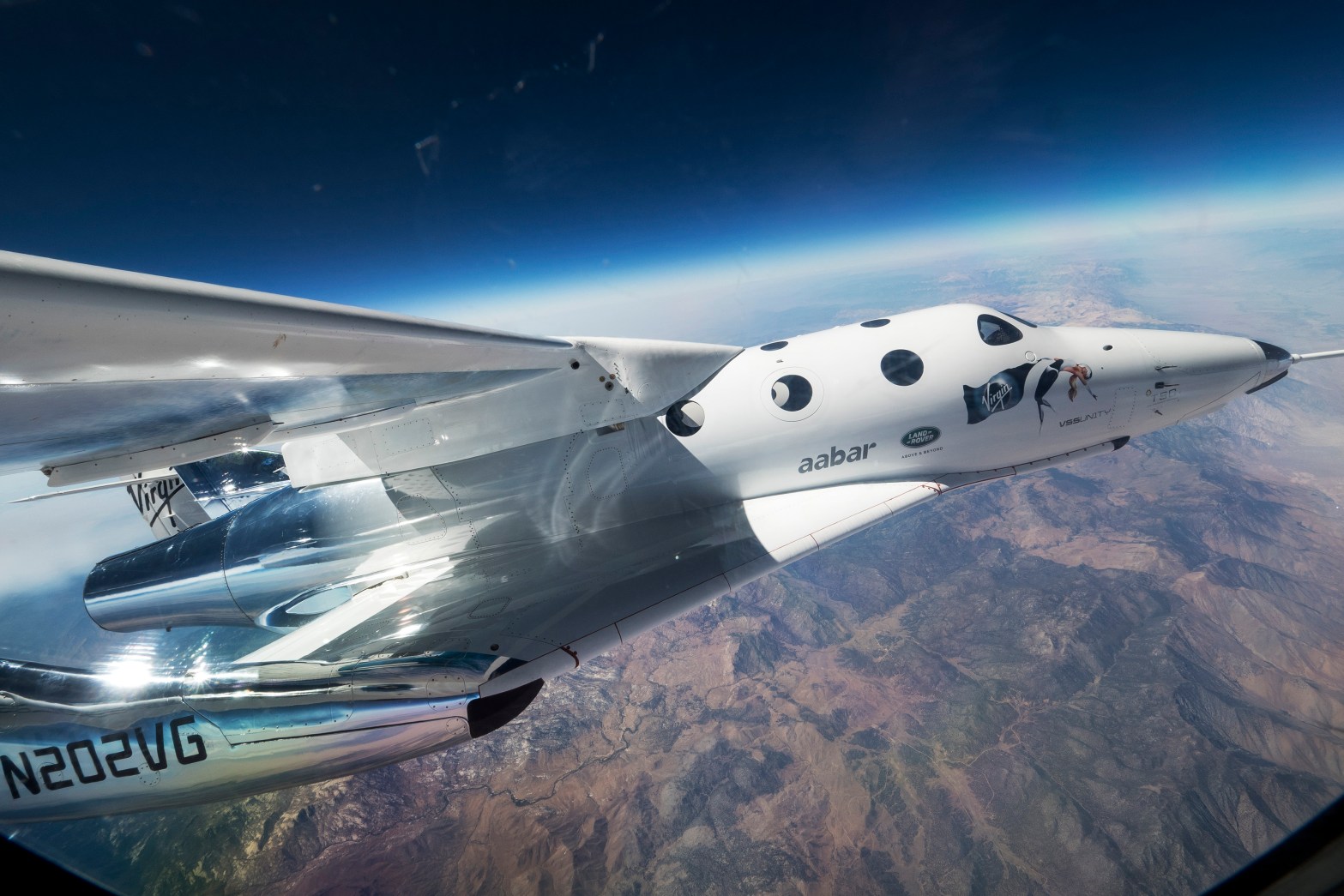
Another great merit of Rutan’s jewel was to influence the multi-billionaire and entrepreneur Richard Branson, who founded Virgin Galactic to develop SpaceShipOne successor, SpaceShipTwo and its mothership White Knight Two. Branson’s dream? To make a breakthrough in the space tourism sector and privately launch (rich) ordinary people in space! Designed by Space Composites, manufactured by The Spaceship Company, operated by Virgin Galactic, SpaceShipTwo failed to reach space with the first produced vehicle, who had a deadly accident on the 31st of October 2014. After years of investigation and enhancements, the second spaceplane, christened VSS Unity, reached space for the first time (at least for US Air Force, not yet the Karman Line) during its flight on the 13th of December 2018 at an altitude of 82,7 Km. But more importantly, during its flight on the 22nd of February 2019, SpaceShipTwo carried the first passenger to space, Beth Moses, Virgin Galactic chief astronaut instructor.
Nowadays, SpaceShipTwo is the most advanced spaceplane in operation and other twin vehicles are going to be produced, in order to build the Virgin Galactic’s fleet and to bring many humans in space in the near future.
But that is not the only one, at least a couple of other projects are at the advanced stage of bringing humans in LEO (and beyond) in the near future.
The first one is the Dream Chaser, spaceplane designed and produced by the company Sierra Nevada Corporation. It is developed to be manufactured in several variants (unmanned, manned) and customizable to be operated by different entities. But there is still a “little” defect to address. It will be launched vertically using disposable rockets, and that means keeping the costs of every launch very high. The actual planned date for the first launch? By the end of 2021.
The second one is going to be the biggest revolution in modern space travel industry: a rocket that can re-enter the Earth’s atmosphere, flying and gliding like a spaceplane. I am talking about SpaceX Starship. Elon Musk’s company is building it “to carry both crew and cargo to Earth orbit, the Moon, Mars and beyond”. It will be fully reusable and it will land and take off from different worlds!
We are about to cross the boundary between science and science-fiction, don’t you think? We will see, even if there is someone who has already booked the first Starship trip around the Moon: the Japanese billionaire Yusaku Maezawa. He has already issued a big check to be the first customer of Starship and the historical voyage should happen in 2023! Or around 2023, since Musk’s deadlines sometimes are a bit too optimistic. One thing is sure though: he will succeed!
Amazed about what the future of reaching space will be? I am thrilled! This is really happening, they are not just theories. Soon many of us will have the chance to reach space, making the first experience as Spacepolitans! And this is just the beginning: wait a few more days and I will show you the next step towards the Spacepolitans age!
 Becoming Spacepolitans
One thought on “Travel to Space (3/3)”