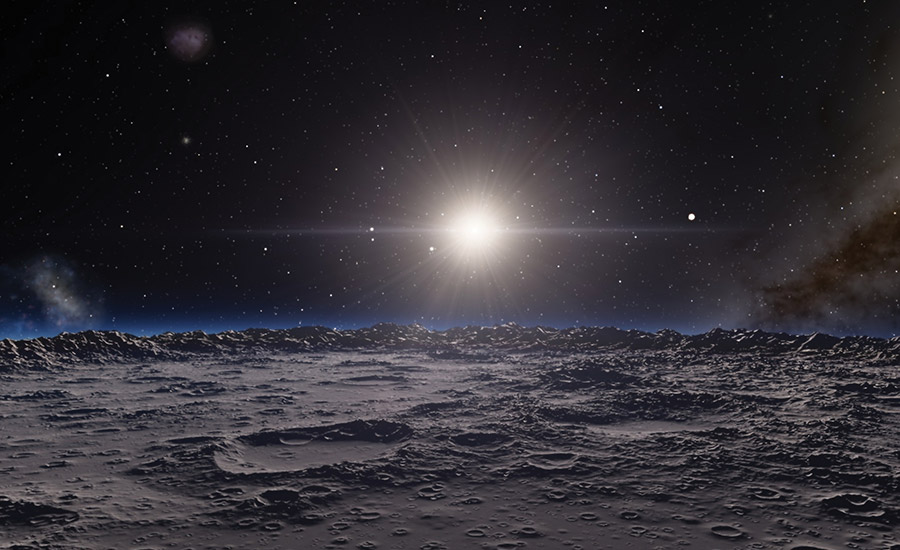
So far, so close, so, what are we waiting for?
To fully enjoy reading this post, listen to Wind of Change by Scorpions.
Sometimes it seems so close that you can grab it, but getting there is not so easy. Even more difficult is for humans to land on its surface and living there seems only sci-fi stuff. Still, our future on the Moon could be different, thanks to Apollo’s twin sister, Artemis, goddess of hunting, the hunt for opportunities…
We were there 50 years ago. We made six manned visits on its surface and then we stopped. Why?
Well, costs and risks were incredibly high, technologies extremely complex… however, it has been mainly a matter of opportunities. The American-Russian race made space a real battleground, the two superpowers diverted a huge amount of money to demonstrate to the world who was the most advanced country. Especially after the first Russian wins, the US went all-in with the first man on the Moon, putting quite all their chips into the pot. As history teaches us, this was a winning game. Then, once reached their goal, Americans started to lose interest in the Moon because there was nothing left to demonstrate to the world, with the Russians giving up their lunar enterprise.
Since they were not even able to monetize their huge investments, they preferred to look at the promising opportunities offered by the zero-gravity space labs in LEO, as we have already seen (Humans in Space (1/2) and Humans in Space (2/2)).
But something happened in the recent times, the wind of change has started to blow on our natural satellite: not only the usual countries are now looking back at it, but also Japan, China, India and Israel have sent robotic probes to the Moon. The main driver? Again, opportunities. Recent scientific researches have demonstrated that our rocky neighbour can unlock many resources to nurture the newly born space economy:
- water ice to provide water, oxygen and hydrogen to sustain human life in space and as fuel for spacecraft engines
- lunar regolith as material for constructions
- huge quantities of metals for in situ utilization
- rare metals worth a lot of money
- abundance of Helium 3, element that can be used as fuel for future fusion reactors
In addition, its proximity to us, the low gravity and the unique environment make it a perfect training camp for all the new technologies and resources that will support the dream of sending humans to Mars. Its strategic location makes the Moon also a crucial crossroads for the future missions in the solar system: it can host refuelling stations for spacecrafts, repairing facilities, storage buildings, and so on, both on the surface and in orbit.
Furthermore, if you add countless scientific researches you can run on it, you will have a very good picture of why the Moon has suddenly become so important for all the countries that want to be part of this new game, full of glittering prizes. Now guess who is accelerating this new interest? Yes, the US, as they are afraid to lose their actual primacy and all the advantages that their actual position could offer them.
So on the 14th of May 2019, NASA Administrator Jim Bridenstine announced to the world a new program that will land the next man and the first woman on the Moon: Artemis.
Its objective is to visit again the Moon by the end of 2024, a very aggressive and strict deadline, that NASA cannot afford alone. That is why, learning from ISS experience, they gained support from a large number of international partners, like the European Space Agency (ESA), the Japan Aerospace Exploration Agency (JAXA), the Canadian Space Agency (CSA) and the Australian Space Agency (ASA). This international alliance will work jointly on the ISS cousin, the Lunar Gateway, the first space station orbiting the Moon.
NASA has also identified an important number of commercial partners, to handle specific aspects of the program. In particular, SpaceX, Blue Origin and Dynetics have been selected to develop the Human Landing System that will bring astronauts on the lunar surface, whilst a long list of companies will work with the Commercial Lunar Payload Services, or CLPS. CLPS have been introduced with the aim of sending small robotic landers and rovers mostly to the lunar south pole region, paving the way to enable the first commercial logistic service in space (ISS resupply missions excluded)!
Thanks to these collaborations, NASA can focus on other critical aspects, like:
- the Space Launch System (or SLS), the huge rocket that will bring again humans to the Moon
- the Orion Spacecraft, the capsule that will host the crews during their travel to the Moon
- the VIPER (Volatiles Investigating Polar Exploration Rover), a special rover that will prospect lunar resources (by the way, its trip will be part of the CLPS contract)
Impressive, isn’t it? Like 35 billion dollars, the actual budget for the first years (2020-2024)! And this is just the beginning…
But what about the first mission? When will we see the first results?
Artemis-1 is actually planned for November 2021 and it will be used to test SLS and Orion, for an uncrewed trip around the Moon and back. Then Artemis-2 will perform on August 2023 almost the same test, but with astronauts on board. Finally Artemis-3 will land again humans on the Moon surface by the end of 2024.
Wait a moment! What about Russia? Although at the beginning Roscosmos thought about joining the program, recently they declared that they are not interested in. Why? What will Russia do then? What about the other countries not part of Artemis, China above all? You can find all the answers to these lunatic questions in my next article: the road to become Spacepolitans is full of Moon dust!
 Becoming Spacepolitans
2 thoughts on “A Moon of Opportunities (1/2)”