Should we love or hate space rocks?
To fully enjoy reading this post, listen to Space Rock by Trip Rexx and to Lucy in the Sky with Diamonds by The Beatles. Ideally treat yourself and enjoy both, one after the other…
Space rocks, how many there are in our Solar System. They could be the enablers of the human expansion or the bearers of the end of the story. For one reason or another, we have to face them and the sooner the better!
Since the discovery of Ceres, astronomers have become increasingly good at identifying asteroids and predicting their orbits, so much that, until 2020, they discovered over a million objects. All these information were and are currently catalogued by the Minor Planet Center (MPC), “the single worldwide location for receipt and distribution of positional measurements of minor planets, comets and outer irregular natural satellites of the major planets”. Basically, it is the official asteroidal registry office. One of its major tasks is to calculate the orbits of newly identified objects and to warn about the risk of their potential future impact with our planet. So, the MPC will be the first to wave the flag in case of a possible collision threat, real “dark side” of our space nuggets.
How can such adorable cosmic pebbles turn into deadly space bombs? The dinosaurs learnt it the hard way: the impact of a huge asteroid, some kilometre in diameter, blew away their habitat and their existence, scientists found great evidence of this event. In 2013, we were luckier, as we witnessed instead the explosion of a tiny twenty-meters large asteroid, thirty kilometres over the city of Chelyabinsk: no casualties, but more than one thousand people injured and seven thousand buildings damaged.
If the first example is an extremely rare event (one every hundred million years), the second one is more common and what happened in Chelyabinsk had not been predicted before. That event rang the bell and the UN itself decided to manage the question more seriously: it created the International Asteroid Warning Network. This international group was tasked with developing a well-defined strategy to assist Governments in the analysis of asteroid impact consequences and in the planning of mitigation responses.
After that decision, NASA reorganized its observation programs and established the Planetary Defense Coordination Office, whose mission is to lead the coordination of efforts to plan responses to these potential impact threats. Similarly, other organizations came to light or increased their activities, like the B612 Foundation, created with “the goal to protect the Earth from asteroid impacts”, and the Asteroid Day initiative, aimed at raising the awareness of the asteroid threat. Just for your info, the Asteroid Day was officially established by the UN at the end of 2016, and since then it is celebrated the 30th of June, anniversary of another historical impact. In 1908 over the Siberian forest of Tunguska, thousands of trees were flattened, a huge number of reindeers were killed and windows were blown hundreds of miles away.
Got it! Asteroid threat is serious business, not just stuff for science-fiction blockbusters like Armageddon or Deep Impact (more fiction than science, to be honest). So, is there anything that could be done? Is there any way to manage such menace?
As said, the first thing to do is to discover, measure and track the potentially hazardous objects (mainly Near Earth Asteroids or NEA) with multiple observations, in order to calculate their future orbits more and more accurately.
The second step is to assess the impact risk. For this purpose, scientists developed the so called Torino Scale (something like the Richter Scale for earthquakes), which allows to combine probability and damage on a scale from 0 to 10 (0 business as usual, 10 adieu world). The record so far is a level 4 on the Torino scale, obtained in December 2004 by 99942 Apophis, a 240-meter-wide stony NEA. Its first measurements led to predicting a possible quite devastating impact with the Earth in 2029, subsequently downgraded to level 0 for 2029 and level 1 for 2036 encounters, thanks to further observations.
Obviously, discovering, tracking and qualifying are not enough to deal with such threat. They are just the first part of the solution This is one of the reasons why many spacecrafts have been sent out to study asteroids, mainly the NEA family. They collected a great quantity of information, allowing scientists to know a lot more about them and to design different planetary defence strategies.
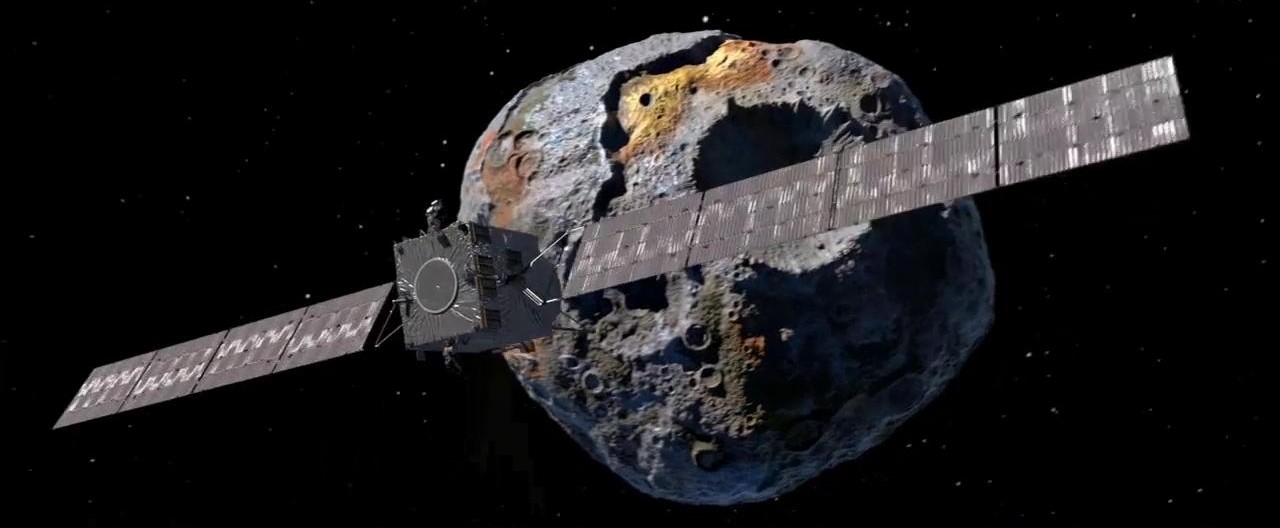
Many other missions are planned in the near future, like Lucy (are you listening to the song? Yes, its name is linked to it!), the first mission to Jupiter’s Trojan asteroids, or Psyche, aimed to study the possible remnant of the metal core of the planet not formed between Mars and Jupiter, the asteroid 16 Psyche (yes, same name of the mission, of course). But the very first missions designed on purpose to test a possible strategy are in their preparation stage: the American DART and the European HERA. The two spacecrafts have the common objective of figuring out if playing pool in space with asteroids works as a defence action, not only as a spectacular celestial game. DART spacecraft, the white cue ball, will be launched in July 2021 aboard a SpaceX Falcon 9 rocket, the stick, to reach asteroid 65803 Dydimos and its moon, Dimorphos, the coloured ball. After getting there, the spacecraft will deliberately crash into the one-hundred-and-sixty-meter large moon, to test if the method of the “kinetic impactor” can succeed in modifying the trajectory of Dymorphos, like the white cue ball does with the coloured ball. And HERA? To see if DART scored the point, placing Dymorphos in a different position, there is the need of a referee and HERA will play that role. Some year later, it will reach Dydimos system, observing all the changes produced by the impact. If everything goes as planned moving Dymorphos into a different position, we could have precious information to develop the first effective defence strategy: playing cosmic snooker!
Apropos of space games, there is a trendy virtual amusement played by many people around the world, which could be applied to space: its name is Minecraft. For those who have never heard of it, in the world of Minecraft the player must collect an incredible variety of resources, combine them together, and use them to build almost everything, limited only by the imagination. It’s a game of discovery and creativity, leading to incredible adventures, a true time stealer.
Having said that, how could we play Minecraft in space? Focusing on our darling rocks, it would be a matter of combining two very promising space technologies: asteroid mining and space manufacturing
As seen in my previous post, Asteroids: Cross and Delight 1/2, asteroids are made of many different kinds of material, from ice to carbon, from siliceous minerals to metal ores. Some of them could potentially be used to build structures in space, some others could provide the basic elements to produce propellants for spacecrafts or even support human life in space. It would be just a matter of collecting, processing and bringing the materials where needed. This is the basic concept of asteroid mining: extract resources from these space quarries to use them for any purpose.
How far are we from make this concept into a real thing? Several studies have already been undertaken on the matter and there are already companies building prototypes and proof of concepts. Trans Astronautica Corporation, or TransAstra in short, is one of them. They are working on a particular method, called Optical Mining. Thanks to the use of solar energy, very abundant in space, this technology allows to extract raw material by hitting a rock with a concentrated ray of light and fracturing it into tiny pieces. In their project, the optical mining device will be mounted on a special spacecraft called Honey Bee (what an explanatory name!). The idea is to fly to an asteroid, up to 40 meters in diameter, cover it with a big bag and hit it with the concentrated sun rays. All the little fragments, but also water and other volatiles, will then be collected in the wrapping bag. A small demo version of the first prototype of the mining spacecraft called Mini-Bee is in its development phase and will be launched for a test flight in space soon (no date released yet!).
There is another strategy that looks pretty promising: using microbes to modify rocks and extract materials or, in a single word, biomining. Even if this technique has been well known for decades, a new experiment called BioRock was recently installed on the International Space Station, providing important results on extracting rare earths from rocks in microgravity. In the future we could recruit armies of microbes, to obtain that raw materials useful for our expansion into space, not only to be used for asteroid mining, but also for In-Situ Resource Utilization (ISRU) on the Moon, on Mars and on all other rocky satellites.
Okay, it is clear, sooner or later plenty of raw material will be available in space, without depending on the very costly launches from the Earth. But how can we use them? Here comes the space manufacturing process. Basically, it involves the production of different goods in the space environment, from construction elements to specific tools and even electronic parts. There is an entire NASA program aimed to develop such capabilities, called In-Space Manufacturing. The private company Made In Space is collaborating to the program and its engineers are working hard to create the first working prototypes. They were able to print an object in space already in 2014, thanks to a special 3D printer installed on the ISS, and they developed also a machine to produce optical fibres in microgravity, resulting in much better quality than the ones made on the Earth’s surface. Very recently they placed on the ISS a module to print ceramic materials, the Ceramic Manufacturing Module, which performed successfully the first test in early December 2020. Made In Space is also working on a technology called Archinaut, that will enable to build structures in space environment, starting from the assembly of very large solar panels and their chassis. After several tests on Earth, the first demonstration flight should happen somewhere in 2022.
So, if we put together asteroid mining and space manufacturing, we could really start to realize in space the infrastructures we need to live there, without depending so much on the precious terrestrial materials. In a few words, we could become real space minecrafters!
Oh gosh, how time goes by talking about asteroids! We went through a lot of information related to our dear space nuggets: registry offices, frightening threats, cosmic snookers, space minecrafters… As you have just seen, they could really be our cross, in case of an impact with our planet. But they could be also our delight, thanks to their precious resources, which could be used to create the bricks for our new homes in space and the tiles to pave the road to become Spacepolitans. So, let’s stay tuned on the incoming exploration missions, the asteroids are waiting for us!
 Becoming Spacepolitans
One thought on “Asteroids: Cross And Delight (2/2)”