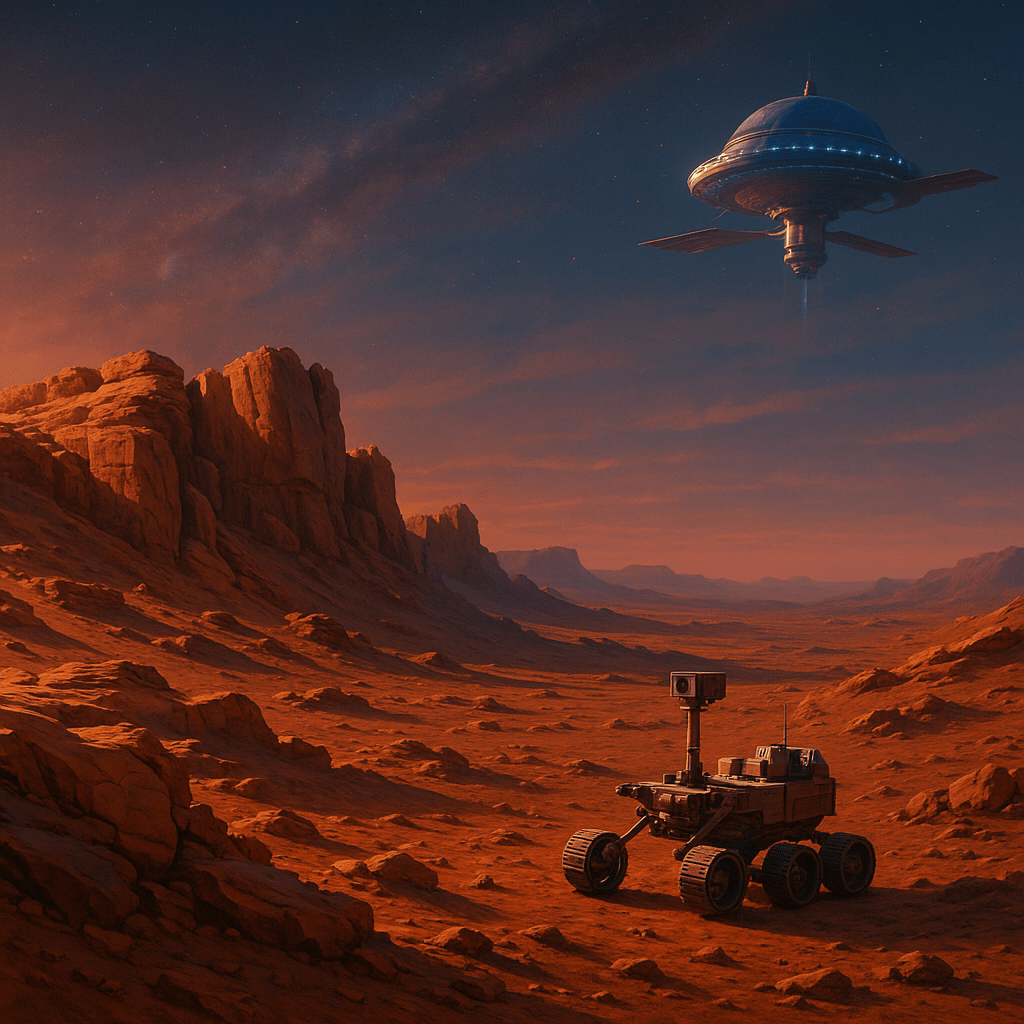
Mars: Fossil World, Future Home, Image generated by AI (DALL·E via ChatGPT, OpenAI), based on concept and guidance from Becoming Spacepolitans.
Mars continues to capture the imagination, not just as a destination, but as a mirror reflecting human ambition, scientific curiosity, and the limits of our readiness. Is it a fossil world to be studied carefully, or a future home to be settled boldly?
Listen to Life on Mars by David Bowie to enjoy reading this post.
***This article is dedicated to Marco, a friend who left this world too early***
The Mysteries on Mars page has just been updated with a new structure, expanded content, and a sharpened Spacepolitan perspective. The red planet is explored from myth to mission, from Schiaparelli’s canals to Ingenuity’s final flight, from early orbiters to the most recent international endeavors. Mars emerges as a planetary time machine, a geological Pompeii preserving potential traces of ancient life beneath its surface.
And with that potential comes a risk.
Human presence on Mars would introduce irreversible biological contamination. Unlike robotic missions, which are meticulously sterilized, astronauts carry entire microbiomes that cannot be separated from them. If Earth life reaches Mars before native life is found or ruled out, it may never be possible to distinguish them.
This concern echoes recent reflections from ESA astronaut Luca Parmitano, who emphasized the current limits of Mars feasibility. Prolonged radiation exposure, the absence of self-sustaining life support systems, and severe physiological risks make the timeline for human missions more uncertain than public discourse often suggests. “The human being is still the weakest element,” he observed, a perspective grounded not in fear, but in technical realism.
The Spacepolitan approach aligns with this view from a planetary ethics viewpoint. It proposes an orbit-first strategy: teleoperated rovers from Martian orbit, research habitats on Phobos and Deimos, and scientific caution until the benefits of human surface presence outweigh the risks.
The red planet is not a blank slate. It is a unique scientific relic, one that may still whisper stories of another kind of life.
Should Mars be a fossil world or a future home? It could be both, but not simultaneously.
Ready for the red landscape? Explore the fully updated page “Mysteries on Mars”, with a soundtrack included and reflection required.
Space for All, All for Space!
 Becoming Spacepolitans