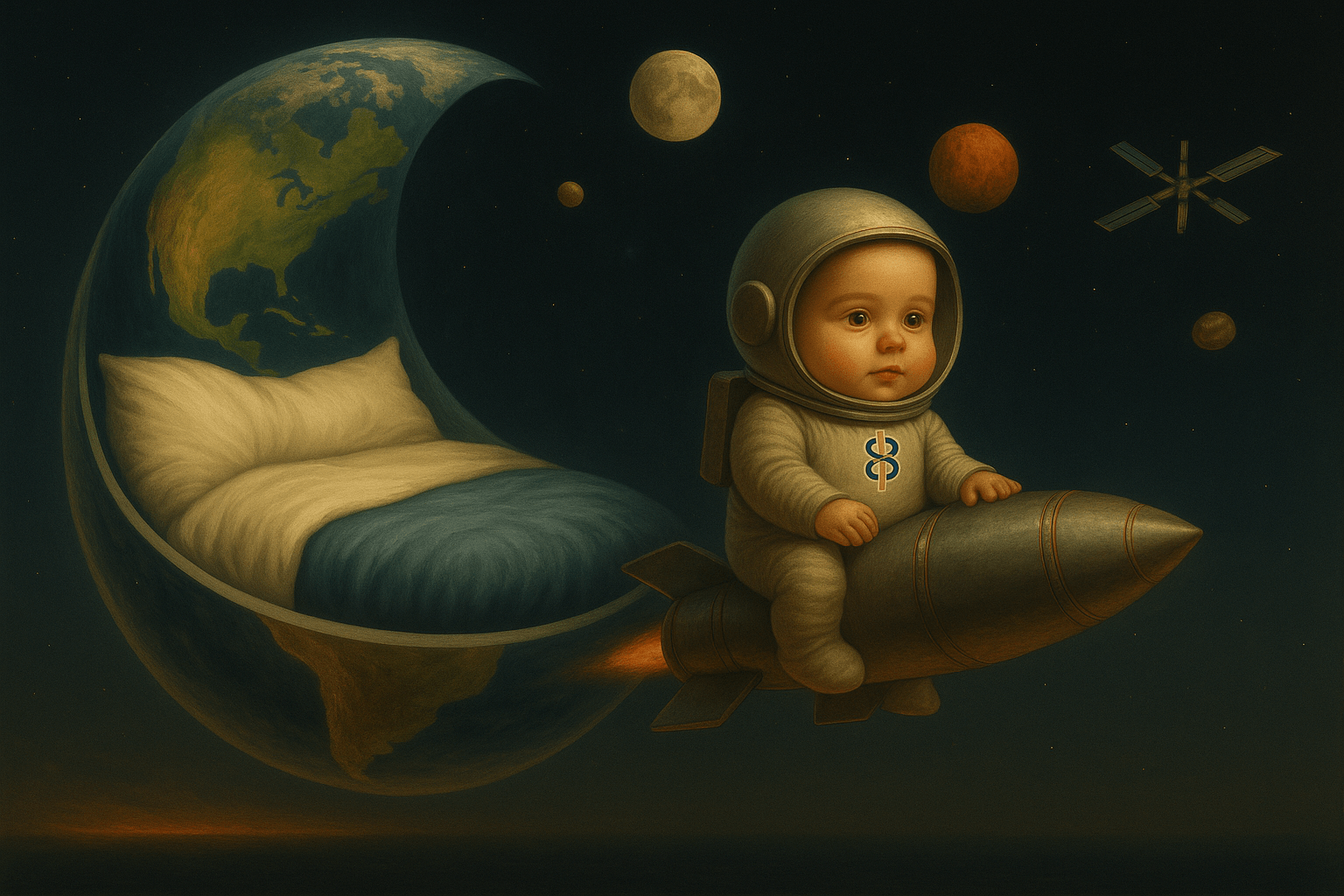
Earth is the cradle of humanity, but one cannot live in a cradle forever. Credits: created with Assistance from OpenAI’s DALL·E
58 years after the Outer Space Treaty, ‘Humans in Space’ returns, from sci-fi dreams to real outposts and future homes like Hestia Asterobase.
Listen to Space Colony by Mili to enjoy reading this post.
On October 10, 1967, the Outer Space Treaty entered into force, setting the foundations for peaceful cooperation beyond Earth. Today, fifty-eight years later, we celebrate that spirit with a new look at our shared adventure: the updated Humans in Space page of Becoming Spacepolitans.
From the first stories that imagined brick moons and asteroid homes, to the real pioneers who turned imagination into science — Hale, Tsiolkovsky, Cole — humanity has slowly learned how to live beyond its cradle. The page traces this evolution through early space stations, the cooperative marvel of the ISS, the rise of Tiangong and upcoming commercial outposts, and the Lunar Gateway that will soon orbit our nearest neighbor.
And then, as always, the story circles back to the future. The vision of living inside asteroids, once just a dream of Dandridge MacFarlan Cole, finds new life in Hestia Asterobase, our upside-down village carved in rock, where imagination becomes habitat.
The Outer Space Treaty reminded us that the cosmos belongs to everyone. Humans in Space shows how far that idea has carried us, and how much farther we can still go
Space for All, all for Space!
 Becoming Spacepolitans