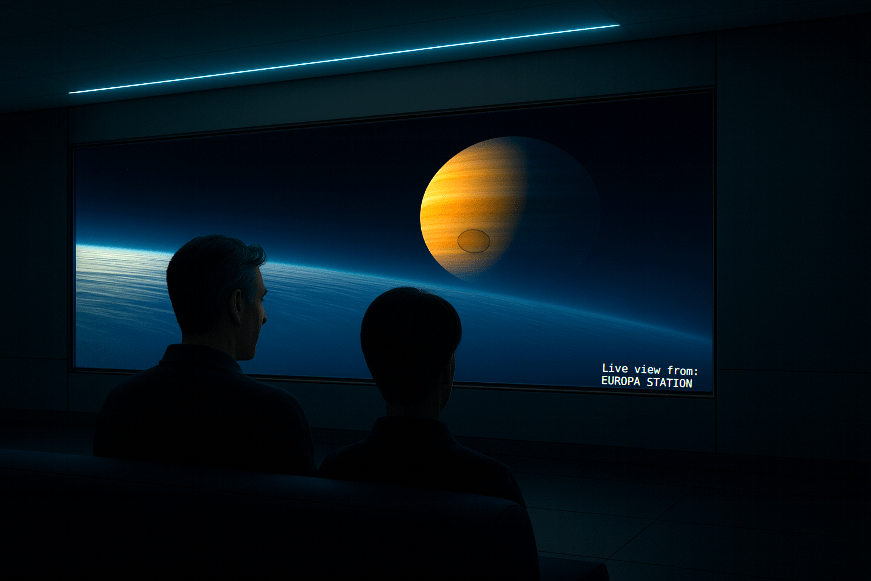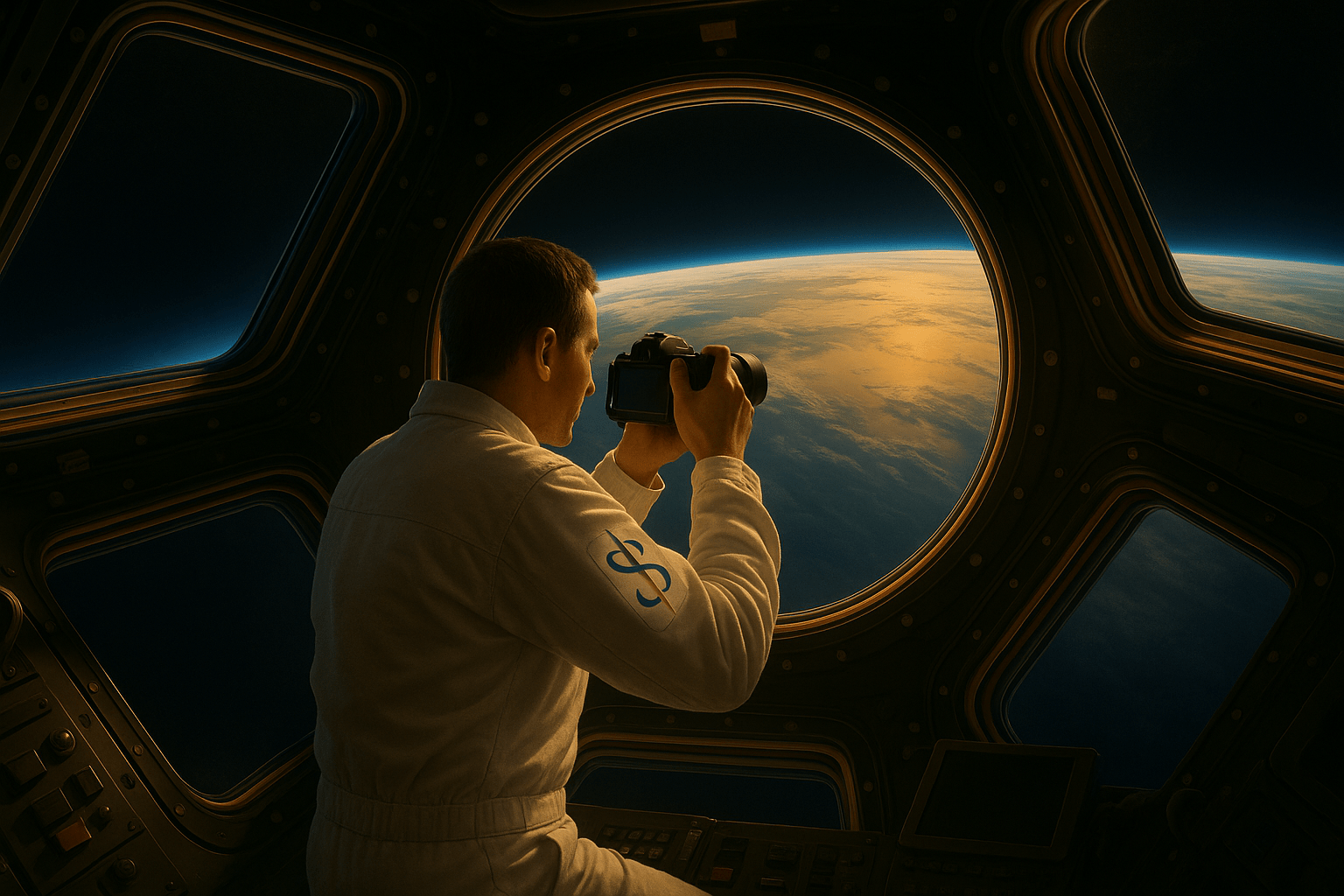
Space Is the Cornerstone of Human Evolution

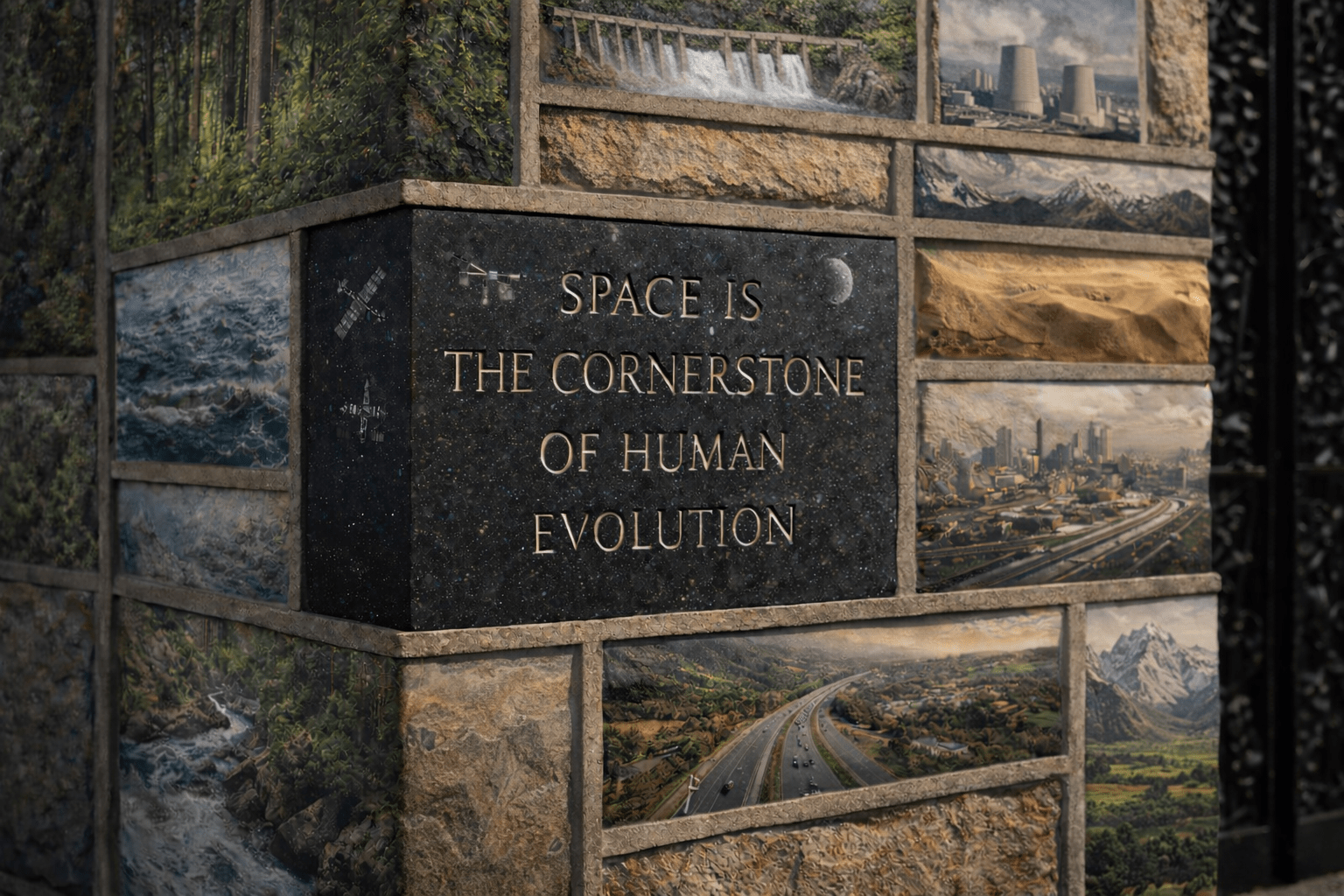
Space is the cornerstone of human evolution. Credits: created with Assistance from OpenAI’s DALL·E

If space is the cornerstone of human evolution, then understanding this shift is no longer optional. It is part of becoming aware of where we are heading.

Listen to The World is not Enough by Garbage to enjoy reading this post.

There comes a moment in every architecture when the cornerstone is placed. The element that aligns the structure, defines its geometry, and gives coherence to everything that follows.

Today, Space for Earth becomes that cornerstone within Becoming Spacepolitans.

This page is not another thematic essay. It is the programmatic bridge between the Manifesto and the entire portfolio of topics that explore how humanity is already extending beyond the planet.

The Manifesto defines the planetary problem: a civilization designed to expand operating inside a finite biosphere. The Sustainable Development Goals represent humanity’s first coordinated attempt to address that structural tension. But coordination alone does not change geometry.

Space does.

Space is not an escape from Earth. It is the structural layer that enables sustainable human evolution beyond planetary limits. It enlarges the system within which sustainability can operate. It transforms scarcity into an engineering challenge. It allows energy, materials, computation, and industry to progressively extend beyond the biosphere that must be preserved.

The renewed Space for Earth page maps this shift clearly. From planetary observation to resource expansion, from in-space manufacturing to orbital intelligence infrastructure, it shows how the movement toward space is no longer speculative. It is operational.

If space is the cornerstone of human evolution, this page is the cornerstone of the blog’s evolution.

Read the updated page here: Space For Earth.

Space for All, all for Space!
Asteroids Never Get Old

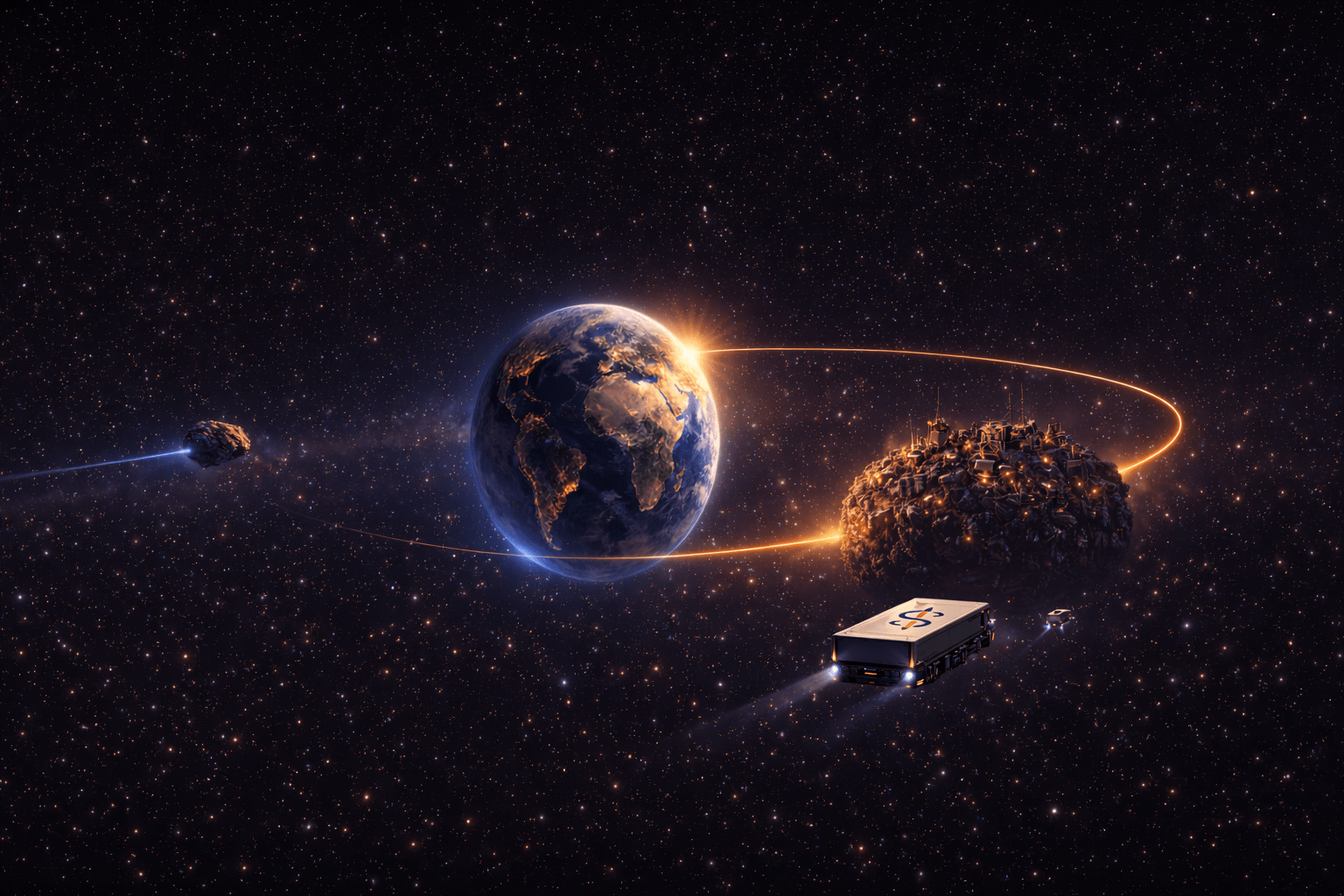
Asteroids: Cross and Delight. Credits: created with Assistance from OpenAI’s DALL·E

They were here before planets were finished, before oceans formed, before life had a chance to emerge. And they are still here, quietly orbiting, occasionally reminding us of their presence.

Listen to Never Gets Old by Sinead O’Connor to enjoy reading this post.

For most of history, we looked at them as omens. Then we studied them as objects. More recently, we learned to calculate their trajectories and measure their risks. Chicxulub, Tunguska, Chelyabinsk. Each event pushed humanity a little further toward awareness and coordination.

But asteroids are not only about danger. They are fragments of creation, raw materials scattered across the Solar System, archives of early chemistry, potential propellant depots, and foundations for future infrastructure.

On the updated Asteroids: Cross and Delight page, I revisited this duality: the cross of extinction, the delight of expansion.

From planetary defense and the institutional maturity it requires, to in-space resource utilization and the possibility of building around these ancient rocks rather than fearing them, the page now follows a clearer arc. Not sensational. Not utopian. Just potential.

Because asteroids never get old.

What changes is how we relate to them. And that, perhaps, says more about us than about the rocks themselves.

Read the updated page here: Asteroids: Cross and Delight.

Space for All, all for Space!
Earth from Space: Sensing the Earthbeat

Sensing the Earthbeat. Credits: created with Assistance from OpenAI’s DALL·E

Earth observation gives humanity unprecedented power to understand our planet as a whole. What follows is not guaranteed. It depends on vision, responsibility, and care.

Listen to Earthbeat by The Slits to enjoy reading this post.

Earth observation grants an unprecedented form of power. Not the power to dominate territory, but the power to understand planetary processes as a whole. For the first time, humanity can observe its atmosphere, oceans, ice, forests, and cities as interconnected expressions of a single system.

This power, however, is neutral in itself. The same instruments that reveal climate change, ecosystem stress, and human impact can also be used to optimize extraction, surveillance, or military advantage. Observation does not dictate intent. It only removes ignorance.

The updated Earth from Space page embraces this tension openly. It does not present observation as salvation, but as responsibility. Space does not offer an escape from Earth. It offers perspective. A vantage point from which long-term thinking becomes possible, but never guaranteed.

Becoming Spacepolitan means choosing how to use this power: not through domination or control, but through understanding, coordination, and care. Space becomes meaningful not as a place of conquest, but as the place from which we learn how to protect our shared home.

Read the updated page here: Earth from Space.

Space for All, all for Space!

BS Tales: A Hurricane Etched into the Stars

A red flash of light that sparkles. Credits: created with Assistance from OpenAI’s DALL·E

After the balance of Chapter 3, BS Tales enters a different state.

Listen to Hurricane by The Asteroid Galaxy Tour to enjoy reading this post.

If Sunshine Coolin’ was about equilibrium, rhythm, and learning how to rest inside Hestia, Hurricane begins where equilibrium is no longer enough. The base does not change its nature, but it reveals another one. Not the gentle companion of calm routines, but a system designed to hold when the outside world turns hostile.

This chapter does not open with action. It begins with perception. Red does not announce danger, but mediation. Time stretches, memory intrudes, and the body briefly loses its reference points. What feels like disorientation is not failure. It is the moment where the protocol replaces the instinct and where the habitat steps forward as an interpreter between the human mind and a violent universe.

The solar storm is real, but it remains mostly unseen. What matters is how it is filtered. Through stone, through gel, through airflow, through measured voices. The cocoon is not confinement. It is a translation. Radiation becomes color. Threat becomes texture. Fear becomes sequence. Hestia does not raise alarms. It keeps time.

Within this controlled storm, the roles become clearer. Hermes acts without emphasis, adjusting the entire asteroid as one more variable in a long equation. Monty trusts the system enough to joke about it. Alethon does something quieter. He learns how to stay oriented while the world is already in motion.

Structurally, Hurricane is the first chapter where BS Tales moves from observation to embodied stress. The events now leave marks. The memory does not reset. The final image of red is no longer abstract. It becomes something that will be carried forward, changing how future moments are perceived.

This is not an escalation for spectacle. It is calibration. The moment when the story teaches its characters, and the reader, how survival in space is not about resisting forces, but about learning how to be held by them. Read the full Chapter 4, Hurricane, and step into the first true test of Hestia Asterobase:

Chapter 4 – Hurricane

When red mediates reality and time stretches, this world reveals that not everything is lifeless. Some things, buried in stone or psyche, are just waiting to be revealed.

Space for All, All for Space!

2025, a Year of Becomings. 2026?

A Year of Becomings. Credits: created with Assistance from OpenAI’s DALL·E

In 2025, Becoming Spacepolitans took shape. A clearer identity, AI & Space, and the launch of BS Tales set the direction for what comes next.

Listen to What About Us by Pink to enjoy reading this post.

2025 has been a year of many achievements for Becoming Spacepolitans. Not in the sense of sudden breakthroughs, but as the result of continuous work, small decisions, and a growing sense of direction. Over the months, the blog has slowly shifted from being a personal space for reflection into something more defined, more structured, and more intentional.

One of the most visible changes of 2025 has been the consolidation of the blog’s identity. A dedicated URL (becomingspacepolitans.blog) gave Becoming Spacepolitans a home of its own, a place that feels stable and recognisable. Along with it came a new logo, not just as a visual refresh, but as a symbol of coherence. Together, these elements helped define the Spacepolitan space more clearly, making it easier to recognise, remember, and share. Claiming an identity also meant taking responsibility for it. For the tone, the pace, and the values behind every page.

Another important step this year was the introduction of a new page dedicated to AI and Space. Rather than treating artificial intelligence as a trend, this section explores it as a lens. A way to think about how we design missions, process data, and interact with increasingly complex systems beyond Earth. AI, like space, challenges us to rethink agency, responsibility, and decision-making. Bringing these two domains together felt natural. Both push humanity to redefine its limits, not only technologically, but culturally and psychologically as well.

2025 was also the year Becoming Spacepolitans expanded into long-form storytelling. With the launch of BS Tales (Becoming Spacepolitans Tales), starting with the Hestia Asterobase collection, the blog opened a narrative dimension that goes beyond analysis and commentary. Fiction became a tool to explore the future, ethics, cooperation, and what it means to remain human in space, a way to make the Spacepolitan future feel alive. Not as escapism, but as a way to give time and continuity to ideas that cannot be fully explored in a single article. BS Tales marked a shift: from isolated reflections to a story that unfolds chapter by chapter.

In 2026, BS Tales will continue with new chapters, starting with Hurricane, a chapter that will change the rhythm of the story and open new narrative paths. At the same time, other sections of the blog will keep evolving. Space is a moving target, and keeping content updated is a never-ending process. There may be new pages. There may be changes in look and feel. What will remain constant is the intention to let the project grow organically, without forcing its direction.

Saying goodbye to 2025 means closing a very important chapter for Becoming Spacepolitans. This year is now reflected in the updated About page, which no longer tells only the story of how the project started, but also describes what the Spacepolitan space has become. A small but meaningful milestone.

Let’s welcome 2026, a year of new stories, new perspectives, and the same curiosity that started it all.

Space for All, all for Space!

Space Music, a Cosmic Christmas Gift

Music for the stars or music from the stars? Credits: created with Assistance from OpenAI’s DALL·E

Music has always been part of the Becoming Spacepolitans journey, not as background noise, but as a reading companion, a heartfelt suggestion, a shared mood.

Listen to Cosmic by Avenged Sevenfold to enjoy reading this post.

Every page and every post on the blog comes with a small instruction: listen to a specific track while reading. Over time, those tracks have formed something bigger than individual recommendations. They have become a shared soundtrack for how we look at space.

At Christmas, music feels especially appropriate. It is one of the few gifts that does not need wrapping. It travels lightly, reaches everyone, and carries memories with it. In that spirit, the updated Spacepolitans Playlist is a small gift to everyone.

With the 2025 additions, the playlist has now grown beyond fifty songs. Each one was chosen because it resonated with a page, a post, or a moment in the evolution of the blog. Together, they trace a path through curiosity, exploration, reflection, and optimism, all key elements of the Spacepolitan mindset.

This year, the playlist also takes a new step forward. In addition to YouTube, the full Spacepolitans Playlist is now available on Spotify. Different platform, same journey. Wherever you prefer to listen, the soundtrack is there.

A dedicated home also opens the door to what comes next. In the months ahead, the blog will begin to take on a shape that reflects its identity more closely, with a clearer layout, a sharper visual tone, and new room for the Tales to breathe. Quiet improvements are already underway.

New songs will continue to be added as new pages and posts are released, but Christmas is the right moment to pause, listen, and look back at how far the journey has already taken us.

Thank you for reading, listening, and becoming Spacepolitans together.

Space for All, all for Space!

Welcome Home: becomingspacepolitans.blog

A New Digital Home Among the Web’s Stars. Credits: created with Assistance from OpenAI’s DALL·E

New address, same vision. From today, every page, post, and tale of Becoming Spacepolitans is easier to reach through one simple URL: becomingspacepolitans.blog

Listen to Home (E.D.L.) by Jet Black Sea to enjoy reading this post.

Following the latest developments (refreshed pages, updated content, new logo, and launch of BS Tales), the project finally deserved its own address. A place that feels coherent with what it is becoming.

From today, everything lives under one simple roof: becomingspacepolitans.blog.

It’s a small change on the surface, but a meaningful one underneath. The pages, articles, and tales all gain a clean and direct pointer. No extra layers, no distractions. Just the project and its voice.

This new address marks a quiet step forward: a place that aligns with the vision and a clearer path for anyone to follow the journey.

A dedicated home also opens the door to what comes next. In the months ahead, the blog will begin to take on a shape that reflects its identity more closely, with a clearer layout, a sharper visual tone, and new room for the Tales to breathe. Quiet improvements are already underway.

Welcome to becomingspacepolitans.blog.

Stay tuned and let’s celebrate shouting the Spacepolitans’ motto:

Space for All, all for Space!

BS Tales: Coolin’ Down the Heat inside Hestia

Coolin’ down the heat for me, coolin’ down and let me breathe. Credits: created with Assistance from OpenAI’s DALL·E

After the warmth of Hestia’s greenhouse, it is time for calm light and quiet balance. A cooler rhythm emerges while a distant tension begins to form.

Listen to Sunshine Coolin’ by The Asteroid Galaxy Tour to enjoy reading this post.

After the heated breath of the greenhouse, Chapter 3 folds into another rhythm. Warm gold gives way to cool cyan. Moist air narrows to a controlled stream, and the base reveals its other face. Not the living arc of nature, but the quiet equilibrium of a world carved to steady the pulse.

Here, light flattens temperature, and time moves differently. The body unlearns humidity. Breath settles. Thoughts reorganize. Even simple gestures turn into a slow dance guided by rotation and routine. Heat becomes memory, and the habitat begins to whisper its own form of rest.

Inside this calm, the human pace softens. Warmth is replaced by comfort, motion by pause, and the day’s intensity dissolves into shared quiet. A small ritual of food, a familiar scent rising in slow gravity, a touch of sweetness carried from the green world behind. This is how Hestia teaches its crew to breathe again.

When night approaches, the habitat dims and each corridor tilts toward silence. Interfaces lower their voices. Light retracts. The station’s heartbeat becomes a low, steady hum. It is the moment when the base feels most like a companion, watching over its crew while they step into rest.

Yet beneath this calm, Chapter 3 carries a quiet tension. A sense that something beyond the carved stone is shifting its weight. A disturbance forming far away, patient and invisible, waiting in the dark between worlds.

Read the full Chapter 3, Sunshine Coolin’, warm up in the greenhouse, and step into Hestia’s cooler side:

Chapter 3 – Sunshine Coolin’

Dancing between warm and cool, this world reveals that not everything is lifeless. Some things, buried in stone or psyche, are just waiting to be revealed.

Space for All, All for Space!

BS Tales: The Arc of Life opens Chapter 3, Sunshine Coolin’

A wave of warmth running clear through the light. Credits: created with Assistance from OpenAI’s DALL·E

Under Hestia’s curved sky, a small arc carved in 11-Amor’s equator learns the rhythm of life.

Listen to Sunshine Coolin’ by The Asteroid Galaxy Tour to enjoy reading this post.

After gathering in the Welcome Room, the crew moves deeper into the base. The passage opens into the first operational module of Hestia, the Greenhouse. Warm light spreads across the curved interior, carrying the scent of moisture and new soil. It feels like crossing from construction into creation.

What began as an experiment in controlled ecology now marks the transition from mere survival to the cultivation of life in motion. The Greenhouse is more than a technical achievement; it is the first living circuit between light, gravity, and time. Each plant grows under a sky that turns above it, learning to root itself in a moving world. Every rotation becomes a lesson in adaptation, and every leaf a proof that life can find rhythm even on a spinning rock.

As they move through the light, words and impressions overlap without effort. Hermes speaks softly, its tone almost reflective. Monty answers with sensations rather than data, letting her voice trace the warmth around them. Aletheon listens, but the sound awakens something older, a memory rising with the scent of Earth.

Where gravity feels different and beauty pulls with greater force, the Arc of Life begins. Chapter 3, Sunshine Coolin’, opens the awakening of Hestia:

Chapter 3 – Sunshine Coolin’

Let’s unfold life in the world where not everything is lifeless. Some things, buried in stone or psyche, are just waiting to be revealed.

Space for All, All for Space!