Sustainable Development Goals vs Space – 1/2

How the Outer Space could help us to reach the World’s ambitious targets

To fully enjoy reading this post, listen to Time is running out by Muse.

All UN member states have a lot to do to accomplish their mission in reaching the Sustainable Development Goals, or SDGs. The first deadline is 2030. Is it feasible? Are these countries doing already enough? What can be done to accelerate this process? Let’s see…

Many people know them, many do not. Sustainable Development Goals are “a universal call to action to end poverty, protect the planet and improve the lives and prospects of everyone, everywhere”, as stated in their dedicated UN website. In a few words, they are a list of seventeen commitments that all the nations have subscribed in 2015 to solve the big troubles of our world. They are not legally binding, of course, and the UN are relying on each single country to take ownership of the goals and implement them by 2030.
After five years, the UN stated that good progress has been made, however, the planned actions have not advanced at the right speed required to reach the targets within the agreed deadline.
2020 should have been the starting point for the initiative named “Decade of Actions”, aimed to speed up the delivery of the global goals. However, something else has distracted the world and we all are aware about that is. The COVID-19 crisis has already put in danger sustainability gains achieved so far in and the UN has urged that a “transformative recovery” must be pursued by nations to address the crisis itself, reduce the risks of other similar crisis and relaunch the SDG initiatives.
What could be one transformative element to help driving such a dramatic change? Outer Space is a particularly good candidate. The potential it could unleash is so huge that, if exploited in the right way, it would be of great help in achieving those much-needed results.
The UN Office for Outer Space Affairs, or UNOOSA, has already done an exercise to understand how space has been helping the achievement of the SDGs (Space4SDGs). However, those contributions could be far more effective if space technologies were pushed to a much higher level.
Here below we will dive into the SDGs, one by one, and suggest some of the contributions that space could bring to them in the short and in the long term.

SDG 1 – No Poverty
Earth Observation technologies (presented already in the article Observing Earth From Space) are helping already in forecasting natural disasters to better coordinate aid provision, in optimising the sustainable utilisation of natural resources and providing efficient support to vulnerable populations.
However, the biggest contribution could come from space resource mining.
Even if not signed by the most important space-capable countries, the UN Moon Treaty introduced a very important principle about space resources: they “are the common heritage of mankind”. In a sense, it means that the wealth generated by their exploitation must be shared between all countries, no one excluded.
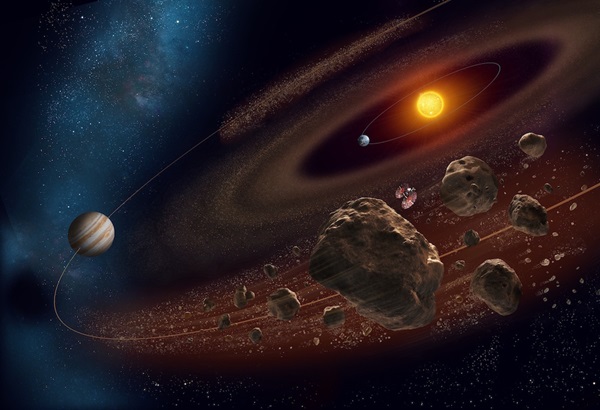
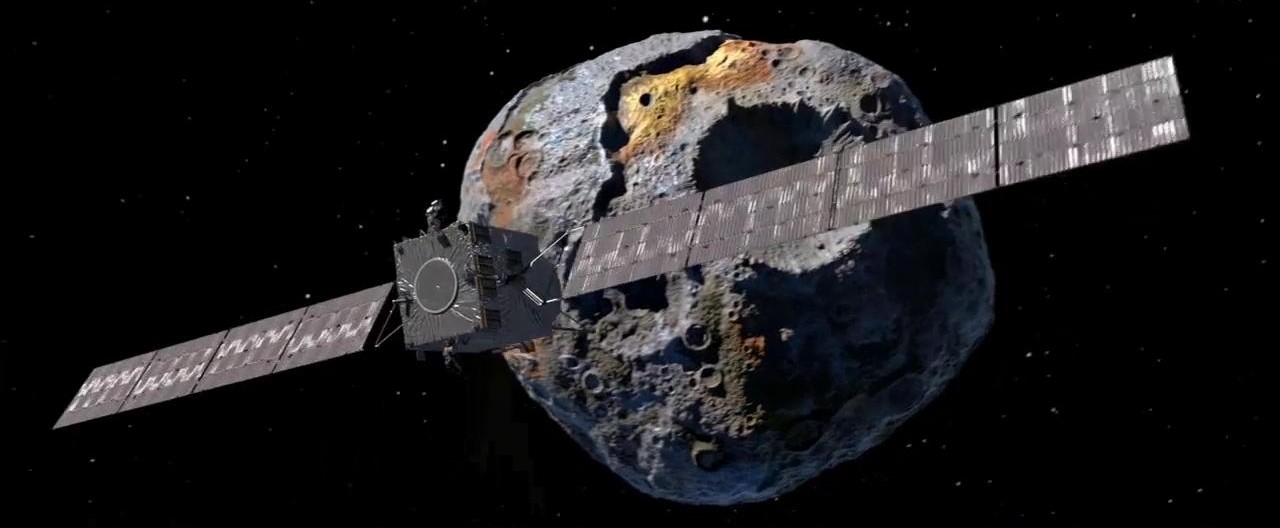
The matter is not at all easy to handle, since only the resources in the asteroid belt could be worth trillions of dollars and, as a consequence, they could generate serious issues in the world economy, if not managed carefully. A potential simple solution could be to introduce a license with specific caps to mine in space and a tax for the precious resources brought back to Earth. We could call it the “Space Tax” framework.
Who or what should handle such a huge bureaucratic power? As advocated by the Moon Treaty itself, it should be an “international regime”, possibly an expression of the United Nations themselves (why not directly the UNOOSA?). All the proceeds should then flow through the various UN programs and agencies, also feeding these SDGs and related initiatives. It would be extremely important to avoid giving money directly to local governments, since, especially in the poorest countries, the benefits would never reach the population…


SDG 2 – Zero Hunger
Poverty and hunger are very often the sides of the same coin. Hence, all Earth Observation technologies supporting SDG 1 are already providing benefits even to this goal. They are key in optimising crop productivity through increased efficiency in the use of existing resources and in improving livestock management through enhanced monitoring and identification of suitable grazing.
The Space Tax, proposed above, could be used of course to support SDG 2, fueling programs to sustain developing countries.
Nevertheless, there are other additional and important contributions. To survive in space, there are several projects running to understand how to produce crops with very scarce resources, such as light, nutrients and water. One of the most interesting one is called Greencube, a micro-garden contained in a cubesat (a kind of satellite with small and standard dimensions) that will be placed into orbit in 2021, with the aim of growing plants in space’s extreme environment and managing all the scarce resources contained in it. What will be learnt from this experiment will be of great help also to improve crop production in other environments with very scarce resources. This is just an example of the various experiments that are or will soon be performed in space for crop production!
Finally, in the distant future, farming stations in space could be built with the purpose of producing food for humans living in space and also for those living on the Earth. The limit will be just their dimensions.

SDG 3 – Good Health and Well-being
It might sound repetitive; Earth Observation applications are key tools also for this goal. They are used to identify the ecological, environmental and other factors that contribute to the spread of vector-borne diseases, monitoring disease patterns and defining areas that require disease-control planning. Monitoring air quality and traffic from space is even providing useful information to take actions and mitigate conditions that could harm health and well-being.
Another key element supporting this goal is micro-gravity. Our beloved and almost twenty years old International Space Station is the perfect laboratory to run many life science experiments and studies, from new drug development to stem cell utilization, to fight against cancer. These studies cannot be run successfully on the Earth’s surface because the effect of gravity impacts negatively many chemical and physical processes, such as the artificial growth of crystals, just to mention one of the most known.
In the future we could also think to treat specific diseases directly in space, building special hospital stations to use micro-gravity condition as a direct treatment of specific diseases. Can you imagine that? Instead of standard invasive therapies, it could be enough to get into space for some time to get healthy again. Even if it might seem so, this is NOT science-fiction! For example, a very interesting study highlighted that cancer cells are suffering from the lack of gravity, which prevents them from joining together in cancer tissues. Discoveries like this can be impressive game changers for the medicine of the future!
What else? In the near future we could see also autonomous driving enabled by GPS system, that could decrease significantly the risk of car accidents, or 3D printed human organs produced in microgravity that can be used for transplants.
Not enough? The checkmate will then be to move heavy and polluting industries from the Earth to the Outer Space, eliminating definitely the root cause of many diseases.

SDG 4 – Quality Education
One of the issues of bringing education all around the world is that many students are physically far away from the schools they would like to attend. High-speed internet could help them to take advantage of remote learning and e-learning solutions. However, if a place is far away from schools, it is often far away from the internet infrastructure. What could fix this situation? Soon said: satellite internet constellations, like Starlink from SpaceX, Amazon’s Project Kuiper and the British Oneweb, will very soon provide connectivity all over the world, bringing particular benefits to the remote communities, actually cut out.
Another element boosting this goal is the access to the space environment for educational purposes. Just to cite one initiative amongst many, an ESA funded project called Dream Coder 2.0 is actually providing a group of Italian students with the opportunity to develop and execute code on a platform installed on the International Space Station, allowing them to learn how to interact with the station itself and its main operative parameters.
Space development itself is a huge flywheel for education, since it needs more and more STEM students to work on the new technologies and make new scientific discoveries. It will also boost studies in law and economics to establish new regulations, new business models and supply chains. In addition, the space environment itself allows us to run experiments that could not be conducted on Earth, as already mentioned regarding SDG 3.
In a few words Outer Space needs education to be conquered as much as education needs Outer Space to improve!

SDG 5 – Gender Equality
First, the physical differences between men and women are irrelevant in space: astronauts can be male or female, there are no gender requirements, Extra Vehicular Activities (or EVA) included. In fact, there has already been the first all-female EVA outside the ISS and nobody noticed the difference. All activities have been performed perfectly as planned. The NASA Artemis program itself is aiming to land the first woman and the next man on the Moon by 2024.
In general, all STEM studies are not gender specific, even if in the past, they were considered a male domain. However, with the increase of requests of students in these fields, many more women are involved. With the further growth required by space technology development, this effect will be even magnified.
UNOOSA itself has launched a specific initiative, called Space4Women, aiming to speed up the already ongoing gender equalization in the space economy.

SDG 6 – Clean Water and Sanitation
This goal is about water management in all its forms, from sourcing, to distributing, using, and purifying. The immediate contribution of space is again the information coming from Earth observation, enabling a better monitoring of water quality and availability, a precise weather forecasting to prevent the effects of floods and droughts and much more.
However, water is considered the new oil in space: the price for a liter of water in space is around 20.000 $. This is why it is extremely important to develop all the technologies that can enable to recycle all the possible water in space (actually on the ISS more than 90% of water is recycled) and to improve them to get closer and closer to full reusability. All the technologies developed for this purpose will also provide many benefits in recycling and purifying water on Earth, removing pollutants and providing clean water to all.
For this goal too, there is a dedicated UNOOSA portal, named Space4Water. Its vision is to enable all stakeholders involved in the space and water communities to access data and knowledge and to realize the full potential of these two worlds combined.

SDG 7 – Affordable and Clean Energy
One of the most known space application, the Global Positioning System, or GPS, is also a big contributor to this goal. Thanks to its extremely precise timing, the GPS signal is a key element in the management of the so called smart grids, which are the new electrical grids allowing the integration of renewable energy resources and energy efficiency resources in the global electrical grid.
Also Earth Observation applications are supporting this SDG, monitoring the critical infrastructures of the electrical grid, providing weather forecast to predict the production of renewable energy sources and so on.
Furthermore, if we think that every hour our beloved sun radiates more than enough energy on Earth to meet global energy needs for a whole year, it’s easy to come to the conclusion that, for this fact alone, space can support the achievement of this goal in a very effective way! It could be even a game changer in power generation. Scientists came to the same conclusion already decades ago, developing a brand new concept called Space Solar Power. Generally, it consists in putting special satellites into orbit, full of solar panels, that could transform solar energy into electricity. This electricity could then be beamed back to the Earth’s surface and be used in the electrical grid. If the concept seems easy to understand, its practical realization is full of engineering problems, as well as economical disadvantages. However, it is a technology that, with the right level of funding, could be developed just in years, not in centuries: it is only a matter of solving technical issues. Japan, China, Russia and, obviously, the US are already working on several projects related to this and you can bet that before this decade is over, we could see prototypes of powersats over our heads.
Last but not the least, in the future we could exploit an element of the lunar surface, the Helium-3, that is one of the most valid candidates as fuel for the future nuclear fusion reactors (as described in the article “A Moon of Opportunities 1/2”), which will most likely free humanity from any energy production issue.

Oh wow, we have already dealt with a lot of stuff! And we are only just halfway to covering all the SDGs! As you have seen, these goals are extremely challenging and touch upon many of the serious problems that we are facing today. Other important topics will be covered in the next post, to have a complete picture of the entire SDG program. However, what we can already realize is that space was, is, and will increasingly be an important ally in supporting human development without destroying our planet. Becoming Spacepolitans is not only a wish, but day after day it is starting to be a real necessity!

A Moon of Opportunities (2/2)

The Moon for all, all for the Moon!

To fully enjoy reading this post, listen to New Gold Dream by Simple Minds.

The Moon is calling back. The Earthlings nations are answering in different ways, from scientific purposes to commercial programs. Is it a “free-for-all” or is there already a framework to regulate this new gold rush?

Where there are humans, there is politics, we know. When politics and nations are involved, we find the UN. The same applies to the Outer Space. In fact, I have already cited the UN Outer Space Treaty (Travel to Space 1/3), signed by many countries, including the most prominent ones such as the US, Russia, China and the UE. This treaty not only provides definitions and common understandings, but it also states fundamental principles like:

  • Space exploration is open to all States and should be done in the name of mankind;
  • “Outer space is not subject to national appropriation by claim of sovereignty”;
  • “The Moon and other celestial bodies shall be used exclusively for peaceful purposes” and no nuclear weapons are allowed for any reason.

This treaty is an attempt to regulate space exploration and exploitation to avoid what happened with colonialism on the Earth, at least in terms of general principles. Its approach is similar to the one used for Antarctica, with the Antarctic Treaty, but unfortunately it does not provide many details on how to operate on the Moon and on other celestial bodies, such as asteroids, and what to do with their resources.

So the UN produced another document, the Agreement Governing the Activities of States on the Moon and Other Celestial Bodies, better known as Moon Agreement or Moon Treaty. As stated by its name, its purpose is to add details and rules, filling the gaps left behind by the Outer Space Treaty. On top of those details, it envisions also that an international entity should govern the exploitation of space resources, with the aim to share those resources and the technologies used for mining with the developing nations. In this way the treaty is not only sharing part of those resources with the minor countries, but also the intellectual properties developed by private enterprises which usually are more valuable than the resources themselves.

Therefore, very few countries warmed to it and since 1979, the year of its adoption, just 18 of them ratified the Moon treaty, none from the elite group capable of space missions. Why? Soon said: opportunities, in this case denied opportunities.The Moon treaty imposed too many limitations, not only for the countries themselves, but especially for their private enterprises.

So, many nations decided to act by themselves, enacting local laws, quite similar to each other: on one hand, they winked at the Outer Space Treaty (the country do not own space resources), but, on the other hand, they allowed private entities to seek, collect, use and own resources found in space, keeping their industrial secrets for themselves. Examples of these country specific regulations are the U.S. Commercial Space Launch Competitiveness Act (2015) or the Loi du 20 juillet 2017 sur l’exploration et l’utilisation des ressources de l’espace, promulgated by Luxembourg (yes, also Luxembourg!).

In a few words, local and worldwide policies are opening the gates to a new gold dream for all the investors willing to bet on the infinite potential of space. Is it good? Well, for sure the arrival of commercial companies accelerates tremendously much needed technological development, but the lack of common rules sooner or later will lead to some inevitable clashes.

To be honest, speaking about conflicts, something has already happened… We have already encountered the NASA-led Artemis, the most advanced program to bring back humans to the Moon, in collaboration with several other countries and, of course, private companies, mostly American. Obviously, all these different parties need rules to collaborate productively. That’s why, besides the technical program, NASA has worked to collect international consensus on the Artemis Accords, a document providing the needed framework of definitions, common understandings and rules. Its aim is to coordinate all the entities involved and to provide an external and “transparent” view on how Artemis works and will work. In this way other countries can figure out what to expect from it and they can eventually find common ground with their own lunar programs, maybe deciding to collaborate and join the venture.

Again, another good idea, isn’t it? Nevertheless, some have thought that these agreements and the political turn of the Artemis program were not offering enough opportunities to their own country. Guess who? Yes, the Russians.
In a recent declaration, Dmitry Rogozin, Roscosmos Chief, banned Artemis as a “political project” for the US, very similar to NATO, and so not good at all for them. He added also that they (Roscosmos) were observing the departure of their “American partners from the principles of cooperation and mutual support that have developed in cooperation with the ISS”. So it really seems that they have decided to leave the program, in which they were involved for the realization of the Lunar Gateway.

Of course, Russia is not giving up again the lunar enterprise and they have already found a new partner for their program: China! It wasn’t hard to guess, China is the only other country able so far to soft-land payloads to the Moon surface and their lunar program is already well advanced. Actually the first Russia-China agreement was signed in 2019, before Rogozin’s words against Artemis, but now it seems to them the only possible alternative not to lose again the Moon train.

The Chinese program is called Chang’e, after the name of their Moon goddess, and it is currently on the 4th robotic mission. So, when is the first human mission planned for? It should happen by the end of the Twenties, so by 2029-30. Yes, it is a bit more further away in time than Artemis, but their approach will be a bit different. First, they plan to set-up a robotic outpost on the South Pole of the Moon and then they will send there their astronauts. Why the South Pole? Let me think… Opportunities! Yes, the South Pole is the most promising area of the Moon to host a manned outpost, since it contains a lot of iced water, fundamental for human survival, especially in space.
On the technical side, the Chang’e program has already:

  • a huge rocket available, the Long March 5, already capable to send payloads to the Moon
  • a new crewed capsule in testing phase,
  • a mission currently running on the far side of the Moon, the first one ever sent there, named Chang’e-4,
  • at least 4 missions already planned to bring landers, rovers and a sample-return spacecraft.

They are just slightly behind Artemis, but they are catching very fast.

On the other side, Roscosoms lunar program, called Luna-Glob, has a very similar plan, ending with a manned lunar base on the South Pole by the beginning of 2030s. Up to now the program was a bit stalled due to other priorities, but the possible collaboration with China could really speed it up.

Will we see a Sino-Russian base on the Moon’s South Pole by the end of this decade? If China’s money and engineering will merge with Russia’s experience and knowledge, this could be a very plausible scenario, possibly leading to a new Space Race…

Wow, it seems there is a lot going on around the Moon, Artemis and Chang’e (+ Luna-Glob) are the most important and currently the only manned initiatives, but, as illustrated in my previous entry, India with its Chandrayaan Program and Israel with its non-profit organization SpaceIL are also really trying to keep them company!

Then, no doubts! The Moon will be our second rocky home, but who will be first to settle there is still unknown. For sure all of them are working hard to finally go to the Moon to stay, contributing decisively to our transformation into Spacepolitans!

A Moon of Opportunities (1/2)

So far, so close, so, what are we waiting for?

To fully enjoy reading this post, listen to Wind of Change by Scorpions.

Sometimes it seems so close that you can grab it, but getting there is not so easy. Even more difficult is for humans to land on its surface and living there seems only sci-fi stuff. Still, our future on the Moon could be different, thanks to Apollo’s twin sister, Artemis, goddess of hunting, the hunt for opportunities…

We were there 50 years ago. We made six manned visits on its surface and then we stopped. Why?

Well, costs and risks were incredibly high, technologies extremely complex… however, it has been mainly a matter of opportunities. The American-Russian race made space a real battleground, the two superpowers diverted a huge amount of money to demonstrate to the world who was the most advanced country. Especially after the first Russian wins, the US went all-in with the first man on the Moon, putting quite all their chips into the pot. As history teaches us, this was a winning game. Then, once reached their goal, Americans started to lose interest in the Moon because there was nothing left to demonstrate to the world, with the Russians giving up their lunar enterprise.
Since they were not even able to monetize their huge investments, they preferred to look at the promising opportunities offered by the zero-gravity space labs in LEO, as we have already seen (Humans in Space (1/2) and Humans in Space (2/2)).

But something happened in the recent times, the wind of change has started to blow on our natural satellite: not only the usual countries are now looking back at it, but also Japan, China, India and Israel have sent robotic probes to the Moon. The main driver? Again, opportunities. Recent scientific researches have demonstrated that our rocky neighbour can unlock many resources to nurture the newly born space economy:

In addition, its proximity to us, the low gravity and the unique environment make it a perfect training camp for all the new technologies and resources that will support the dream of sending humans to Mars. Its strategic location makes the Moon also a crucial crossroads for the future missions in the solar system: it can host refuelling stations for spacecrafts, repairing facilities, storage buildings, and so on, both on the surface and in orbit.
Furthermore, if you add countless scientific researches you can run on it, you will have a very good picture of why the Moon has suddenly become so important for all the countries that want to be part of this new game, full of glittering prizes. Now guess who is accelerating this new interest? Yes, the US, as they are afraid to lose their actual primacy and all the advantages that their actual position could offer them.

So on the 14th of May 2019, NASA Administrator Jim Bridenstine announced to the world a new program that will land the next man and the first woman on the Moon: Artemis.
Its objective is to visit again the Moon by the end of 2024, a very aggressive and strict deadline, that NASA cannot afford alone. That is why, learning from ISS experience, they gained support from a large number of international partners, like the European Space Agency (ESA), the Japan Aerospace Exploration Agency (JAXA), the Canadian Space Agency (CSA) and the Australian Space Agency (ASA). This international alliance will work jointly on the ISS cousin, the Lunar Gateway, the first space station orbiting the Moon.
NASA has also identified an important number of commercial partners, to handle specific aspects of the program. In particular, SpaceX, Blue Origin and Dynetics have been selected to develop the Human Landing System that will bring astronauts on the lunar surface, whilst a long list of companies will work with the Commercial Lunar Payload Services, or CLPS. CLPS have been introduced with the aim of sending small robotic landers and rovers mostly to the lunar south pole region, paving the way to enable the first commercial logistic service in space (ISS resupply missions excluded)!
Thanks to these collaborations, NASA can focus on other critical aspects, like:

  • the Space Launch System (or SLS), the huge rocket that will bring again humans to the Moon
  • the Orion Spacecraft, the capsule that will host the crews during their travel to the Moon
  • the VIPER (Volatiles Investigating Polar Exploration Rover), a special rover that will prospect lunar resources (by the way, its trip will be part of the CLPS contract)

Impressive, isn’t it? Like 35 billion dollars, the actual budget for the first years (2020-2024)! And this is just the beginning…
But what about the first mission? When will we see the first results?
Artemis-1 is actually planned for November 2021 and it will be used to test SLS and Orion, for an uncrewed trip around the Moon and back. Then Artemis-2 will perform on August 2023 almost the same test, but with astronauts on board. Finally Artemis-3 will land again humans on the Moon surface by the end of 2024.

Wait a moment! What about Russia? Although at the beginning Roscosmos thought about joining the program, recently they declared that they are not interested in. Why? What will Russia do then? What about the other countries not part of Artemis, China above all? You can find all the answers to these lunatic questions in my next article: the road to become Spacepolitans is full of Moon dust!

Travel to Space (3/3)

Spaceplanes, reusability and a look at the future

To fully enjoy reading this post, listen to Breakthru by Queen.

Reaching space on top of a powerful rocket and aboard a spacecraft is a consolidated human activity that has been continuously done in the last fifty years, as detailed in my previous two posts, Travel to Space (1/3) and Travel to Space (2/3). But there is another way and what an amazing one!

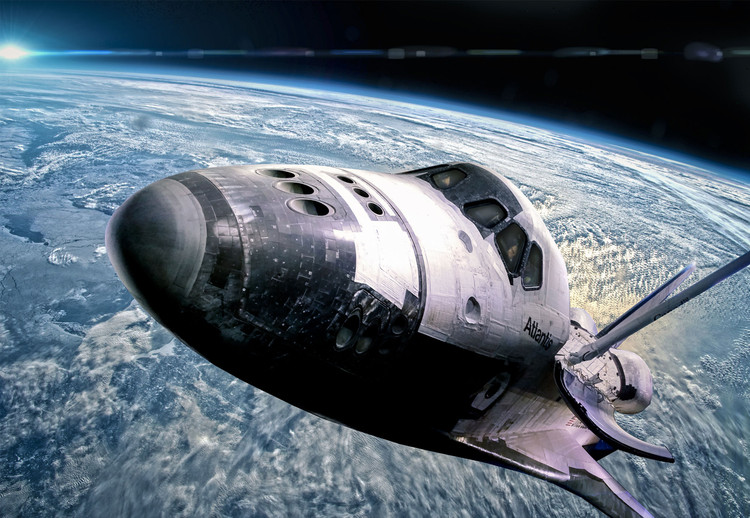
Last time I wrote about the Space Shuttle, an extraordinary vehicle launched vertically to space, clinging to a mighty rocket. The Shuttle was technically a spaceplane, since it was able to fly, glide and land as an airplane through the Earth’s atmosphere and to maneuver as a spacecraft in space. Although reused after every mission, the rocket was destroyed every time and this waste was causing every mission to be too expensive.
How to fix the budget issue of sending humans to LEO? Two concrete solutions have appeared until now and they are currently on their way to become serviceable:

  • making rockets reusable (who said “SpaceX”?)
  • use the Drop Launch testing method for standard operations

Let me describe the second one, since I already talked about the first one in my last entry (remember the Crew Dragon and the Falcon 9?).

The Drop Launch, or Drop Test, is a method very well known in aviation, since it has allowed to test several experimental aircrafts. One of the most popular is the North American X-15, operated by NASA and the US Air Force. In a few words the X-15 was a hypersonic aircraft, very similar to a missile, with a rocket engine. It was sent into the sky attached to a modified B-52 aircraft and, once it reached the height of 13.7 km, it was released from the mothership. After a few second its powerful rocket engine was started, allowing it to reach the hypersonic speed of Mach 6.7, unbroken speed record for an aircraft so far. During his various missions, it was able to reach regularly the 80 km height (space limit for the US Air Force) and it was also able to overcome twice the Karman Line (100 km height or space limit for the UN).

Thanks to the X-15 Program, the Drop Launch itself proved to be a very affordable and low-cost way to launch humans in space, compared to the standard disposable rocket technology. Nevertheless, it was used only as a testing method for many years, until the enlightened mind of Burt Rutan designed the SpaceShipOne spaceplane and its mothership, the White Knight. Both vehicles were built and operated by a 100% private company, Scaled Composites, founded by Rutan himself, and they set a very important milestone: the 21st of June 2004 SpaceShipOne became the first private spaceplane flying over the Karman Line and its pilot, Mike Melvil, the first licensed commercial astronaut. In the four months of operations, SpaceShipOne was able to go over the Karman Line three times, reaching a maximum height of 112 Km in its final flight.

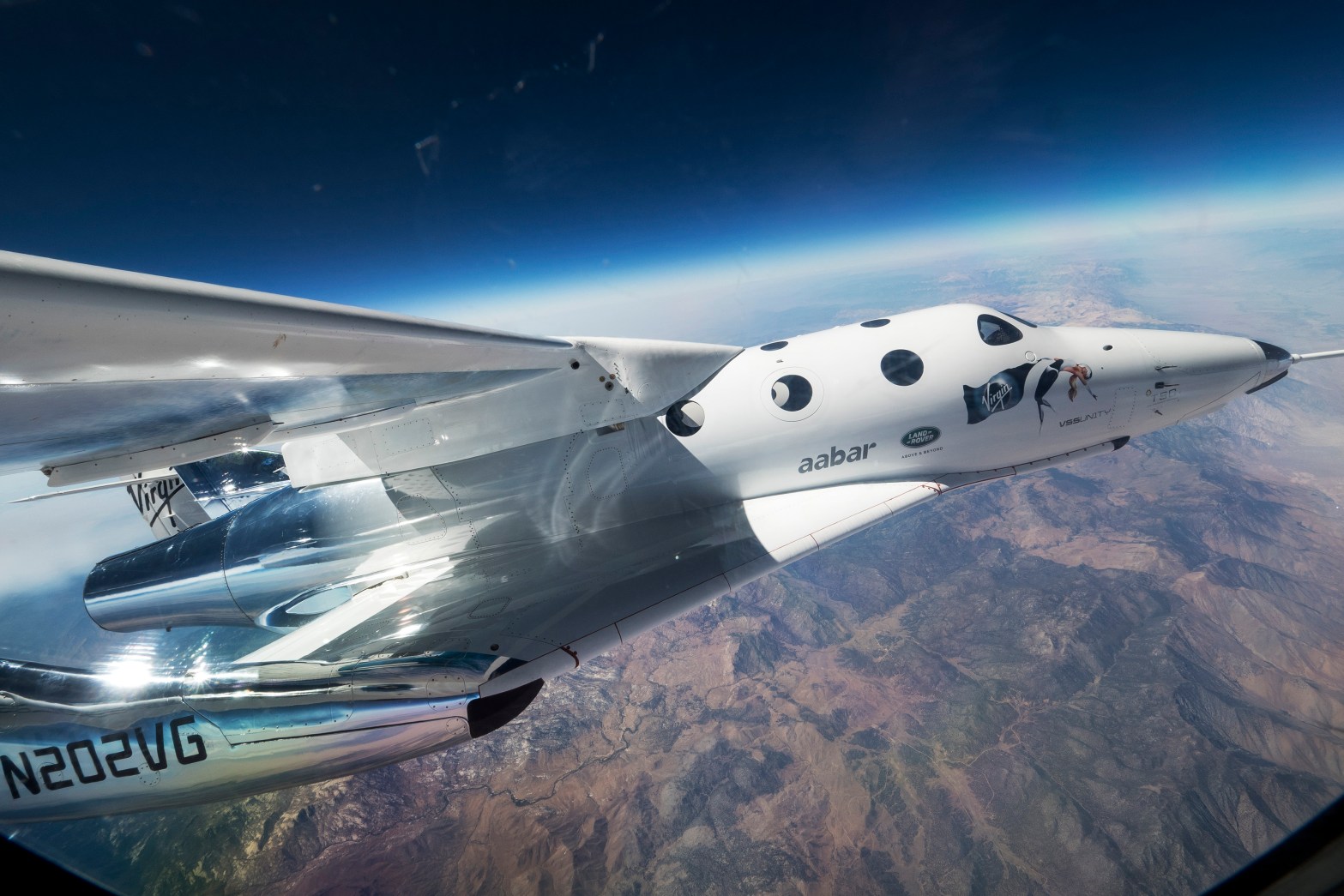
Another great merit of Rutan’s jewel was to influence the multi-billionaire and entrepreneur Richard Branson, who founded Virgin Galactic to develop SpaceShipOne successor, SpaceShipTwo and its mothership White Knight Two. Branson’s dream? To make a breakthrough in the space tourism sector and privately launch (rich) ordinary people in space! Designed by Space Composites, manufactured by The Spaceship Company, operated by Virgin Galactic, SpaceShipTwo failed to reach space with the first produced vehicle, who had a deadly accident on the 31st of October 2014. After years of investigation and enhancements, the second spaceplane, christened VSS Unity, reached space for the first time (at least for US Air Force, not yet the Karman Line) during its flight on the 13th of December 2018 at an altitude of 82,7 Km. But more importantly, during its flight on the 22nd of February 2019, SpaceShipTwo carried the first passenger to space, Beth Moses, Virgin Galactic chief astronaut instructor.

Nowadays, SpaceShipTwo is the most advanced spaceplane in operation and other twin vehicles are going to be produced, in order to build the Virgin Galactic’s fleet and to bring many humans in space in the near future.

But that is not the only one, at least a couple of other projects are at the advanced stage of bringing humans in LEO (and beyond) in the near future.

The first one is the Dream Chaser, spaceplane designed and produced by the company Sierra Nevada Corporation. It is developed to be manufactured in several variants (unmanned, manned) and customizable to be operated by different entities. But there is still a “little” defect to address. It will be launched vertically using disposable rockets, and that means keeping the costs of every launch very high. The actual planned date for the first launch? By the end of 2021.

The second one is going to be the biggest revolution in modern space travel industry: a rocket that can re-enter the Earth’s atmosphere, flying and gliding like a spaceplane. I am talking about SpaceX Starship. Elon Musk’s company is building it “to carry both crew and cargo to Earth orbit, the Moon, Mars and beyond”. It will be fully reusable and it will land and take off from different worlds!

We are about to cross the boundary between science and science-fiction, don’t you think? We will see, even if there is someone who has already booked the first Starship trip around the Moon: the Japanese billionaire Yusaku Maezawa. He has already issued a big check to be the first customer of Starship and the historical voyage should happen in 2023! Or around 2023, since Musk’s deadlines sometimes are a bit too optimistic. One thing is sure though: he will succeed!

Amazed about what the future of reaching space will be? I am thrilled! This is really happening, they are not just theories. Soon many of us will have the chance to reach space, making the first experience as Spacepolitans! And this is just the beginning: wait a few more days and I will show you the next step towards the Spacepolitans age!

Travel to Space (2/3)

Mastering transportation to Low Earth Orbit

To fully enjoy reading this post, listen to Planet Caravan by Black Sabbath.

Low Earth Orbit is actually our new Space frontier, since only pioneering Apollo crewed missions have been able to go further. In the following entry you will find out how we were and are able to reach it consistently.

Once you reach the Space passing the famous Kármán line, you enter an area extending up to 2000 km of altitude and called Low Earth Orbit (or LEO). This is the region of Space most visited by humans in the last 50 years, since Gagarin’s flight. In fact the next step after reaching the Moon was to start having a human presence in space and trying to get benefits from this unique environment. LEO was the obvious choice due to its proximity to the surface of the Earth and to the natural protection from solar and cosmic dangerous radiations (Earth’s magnetic field offers shelter up to 1000 km from the surface of the planet). So in the early Seventies both Russia and the USA started to launch special infrastructures with their rockets to LEO, the so called space stations (see my blog posts Humans in Space 1/2 and Humans in Space 2/2 for references to the following space stations), designed to host astronauts and make scientific and technological experiments.

The Russian Proton was the first one to launch in LEO the Salyut-1, in April 1971. Astronauts were sent separately after two months, using one of the earliest Soyuz rocket-spacecraft systems, during the triumphal-tragic Soyuz 11 mission: triumphal because it was the first successful mission to bring astronauts to a space station, tragic because they lost their lives during the re-entry for a technical problem. Modern heroes, no doubt, like all the others who lost their lives at work, especially when working for all humankind.
Two years later, the Americans were also able to perform a similar activity, with astronauts reaching the Skylab station on board of modified Apollo spacecrafts, launched by modified Saturn rockets..

If the Soyuz missions in LEO continued for years, allowing astronauts to get on the MIR station and then the International Space Station (ISS), the Apollo-Saturn system was dismissed during the second half of the Seventies. It was replaced some years later by an authentic monster machine, the Space Transportation System (or STS).
The core of this incredible technological work of art was its reusable orbiter spacecraft, the well-known Space Shuttle. It was capable of sending into orbit from five to seven astronauts per flight and to carry tons of various equipment, landing smoothly and safely after each mission (accidents excluded). In its 135 missions from 1981 to 2011, the Space Shuttle accomplished several goals:

  • it transported astronauts to the Russian MIR
  • it allowed the deployment of devices like the Hubble Space Telescope, the Chandra X-ray Observatory and the Galileo Jupiter probe, just to cite a few
  • it was the space steed of the European Spacelab
  • it was the key mean of transport for the building of the International Space Station
  • it deployed several satellites and experiments, and so on and on…

To cut a long story short, the Space Shuttle was the king of transport in LEO, allowing to use space as a new field of human operations. After its retirement, only the Soyuz continued to bring astronauts to space, specifically to the ISS and this situation remained as such for almost 9 years, Except for China which had also been able to send astronauts to space. In 2012 it actually managed to send astronauts on a space station. The Shenzhou Program is still currently running and has already planned future missions. It is based on Long March rockets and Shenzhou spacecrafts, vehicle derived from the Russian Soyuz.

If I had written this post before the end of May 2020, I would have stopped here. But today I can finally add a new paragraph about travelling to LEO: the first commercial flight for astronauts in Space. SpaceX, the company founded and led by Elon Musk (his name speaks for itself), showed its capability to reach LEO in September 2008 with the fourth launch of Falcon 1. After that event, NASA awarded SpaceX a millionaire contract to send payloads to the ISS first, and then astronauts too, allowing the USA to become again self-sufficient in this strategic activity. It took almost twelve years after the successful launch of Falcon 1, for SpaceX to become the first commercial company to send humans in Space. But they did it! It was the 30th of May 2020, astronauts Robert Behnken and Douglas Hurley lifted off at 3:22 p.m. EDT on top of a brand new Falcon 9 rocket, hosted on the Crew Dragon spacecraft, christened Endeavour. The goal of the mission was (well still is at the moment of writing) to bring the two astronauts to the ISS and then back to Earth. The Endeavour safely docked to the ISS after around nineteen hours of space travel and actually it is currently still docked there. The plan is to travel back to Earth in July or August, depending on how much the current testing will last.

Now you must be convinced, rockets are the best choice to reach space, at least until now. But they are not the only way to reach Space. Surprised? Curious? I will talk about this additional technology and about the future of human Space travel in my next post, offering you one more clue on our path towards Becoming Spacepolitans!

Travel to Space (1/3)

How first humans reached space and more…

To fully enjoy reading this post, listen to Ballata by Litfiba.

Space, last frontier… But where is this frontier? How much farther from Earth can we say the Space starts? And then, how do we get there? How can we reach it? Let’s see…

Well, we are lucky! The UN Outer Space Treaty, come into force on October 1967, legally states that space starts 100 km from the sea-level, following the Kármán Line, named after Theodore von Kármán, a Hungarian American engineer and physicist. He was the first to calculate the altitude at which the atmosphere becomes too thin to support an aeronautical flight, 83,6 km, just below the 100 km threshold chosen in the treaty as the space boundary.
100 km seems not so distant from the Earth’s surface, especially today, but it seems quite a lot in height, more than 12 times Mount Everest. So how to get there and how to go beyond?

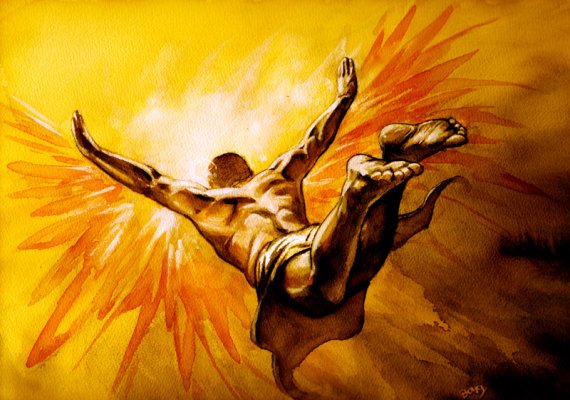
Mythology provides the first known tentative with the incredible flight of Icarus. Using special wings, he tried to get higher and higher, in the quest of reaching the Sun. Thanks to Kármán studies, we know now that it wasn’t the Sun, heating up his wings, which made him fall to the ground, but the less romantic rarefaction of the atmosphere. Unfortunately, he was not the first human to reach Space, but his attempt was remarkable.

Another interesting idea was proposed many years later, in 1865, by my beloved Jules Verne in his great novel From the Earth to the Moon: A Direct Route in 97 Hours, 20 Minutes. Supported by very interesting calculations, Verne thought that a very big cannon could be able to accelerate a crewed bullet to escape velocity, thus allowing to leave the Earth, travel in Space and reach the Moon. Physically possible, unfortunately in reality it would end in sending into space just a human smoothie, since the acceleration would be too big for the bullet’s occupants to survive.

Verne’s idea was not so bad and even quite similar to the technology that proves to be the right one: rocketry.
Even if the word rocket comes from the Italian word rocchetto (meaning bobbin or little spindle, after its similar shape), the first rockets appeared in China during the 13th century. They were powered by gun-power and used both in military and as fireworks. Their usage remained the same for centuries until Mr. William Leitch, a Scottish astronomer, suggested to use rockets to enable human spaceflight in 1861. Some years later, at the beginning of the twentieth century, great minds Konstantin Tsiolkovsky (already cited in Humans in Space 1/2), Robert Esnault-Pelterie, Hermann Oberth and Robert H. Goddard started to apply in practice rocketry to spaceflight. They were real pioneers and their theories and experiments led the way to the Russian-American Space Race of the 50s and 60s.

The Russian started in pole position, thanks to the incredible work led by Sergei Pavlovich Korolev, He was the Chief Engineer behind all the Russian “firsts” of that period:

  • the first artificial satellite in orbit, the Sputnik, launched the 4th of October 1957 on one of Korolev’s marvels, the R-7 rocket
  • the first animal to orbit Earth, Laika, launched the 3rd of November 1957 in a modified Sputnik, always on top of a R-7 rocket
  • first man to orbit Earth, Yuri Gagarin, launched the 12th of April 1961 in the Vostok spacecraft, always on top of a R-7 rocket
  • first woman to orbit Earth, Valentina Tereshkova, launched the 16th of June 1963 in the sixth and last Vostok spacecraft, again on top of a R-7 rocket
  • first man to perform a space walk, Alexei Leonov, launched the 18th of March 1965 in the Voskhod-2, again on top of a R-7 rocket.

An impressive list of records: the combination rocket-spacecraft finally allowed men to pass the cosmic Pillars of… Kármán!

The story didn’t end there, obviously.
The Americans were desperately trying to catch up with the Russians after the Sputnik launch, finally playing their trump card, the controversial genius of Wernher Von Braun.
Student of Hermann Oberth first, then father of the terrific nazi rocket bomb V2, he was deported in the US after WWII with his team of engineers. He took up the baton of Robert Goddard, when he was moved to the American space program at the end of the 50s, joining the newly formed NASA.
His first contribution was to the Mercury Project: one of the Redstone missiles designed by Von Braun launched for the first time the American astronaut Alan Shepard in space, aboard the Mercury spacecraft, around one month after Gagarin’s flight.
However, his masterpiece was the Saturn V rocket, the biggest and most powerful ever created so far! Thanks to this gigantic missile, NASA successfully implemented its Apollo Program, sending the first man to the Moon, Neil Armstrong on the 20th of July 1969, and then another eleven astronauts and even three lunar rovers, for a total of 6 successful missions.

If the Space Race almost ended there, rocketry proved to be a successful transport to send payloads and humans in space, opening the new space era.

Eager to see what happened next? Yes? If so, there is a lot to discover about space transportation! The Apollo Program was a great milestone, but just a milestone on the way to become Spacepolitans!

Humans in Space (2/2)

Space colonies today and in the coming years

To fully enjoy reading this post, listen to I.S.S. (Is Somebody Singing) by Chris Hadfield

December 6, 1998, the Russian module Zarya and the US module Unity were mated in orbit by the STS-88 crew, starting the assembly of the most complex and incredible human work: the International Space Station…

In the last blog entry, Humans in space (1/2), I showed you what has been achieved almost entirely in the last century regarding living in space. All those initiatives have ended already. So this second part begins with describing our current home among the stars, the International Space Station (or ISS).
Using the legacy left by the MIR experience, Russia and the USA partnered together to build a common and long-lasting space station, with the participation of other important countries like Canada, Japan and the European Union. That’s why the first word of its name, International, is so well-fitting, that’s why this human work is so important: space is able to unite people from every part of the world, overcoming selfish national objectives!
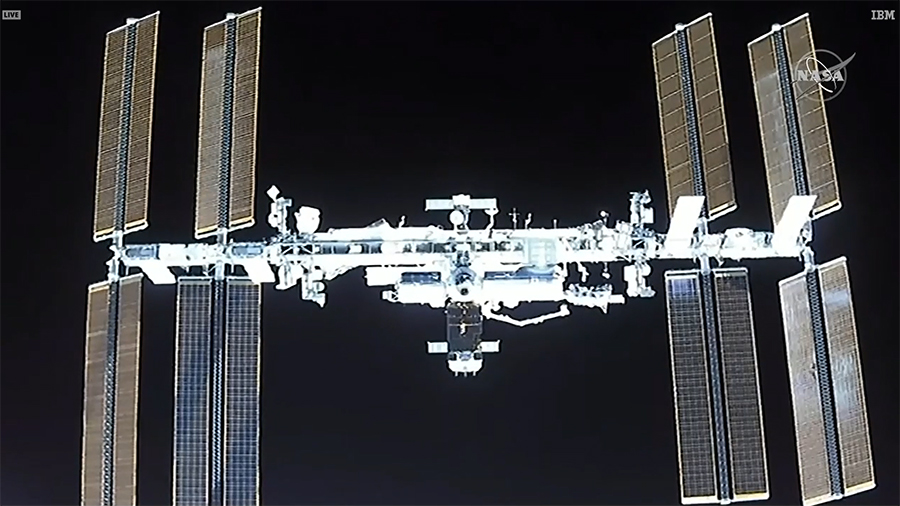
But let’s leave politics to the politicians, let’s have a close look at ISS and its numbers. After the matching of the first two modules, many modules were added during the following years and the actual configuration was reached in June 2011, counting 15 pressurised modules.
The first long-term residents arrived on the 2nd of November 2000, starting the so called Expedition 1 mission. At the moment I’m writing the station is occupied by Expedition 63, having hosted more than 240 humans so far. It has been inhabited for 19 years and a half. Obviously, these numbers are continuously increasing and its decommissioning should happen somewhat around 2030, but it’s not yet decided and NASA is also considering to open it up to commercial partners, especially now that the first commercial capsule with astronauts, the SpaceX Dragon, reached the station.

Ok, the ISS is a technological jewel and a great exercise in international cooperation, point taken. But what is it for? Well, the ISS is a micro-gravity research laboratory in space (yes, a Spacelab!), specifically in Low Earth Orbit, on which astronauts are testing tons of technologies and scientific experiments, with the aim of learning how to live in space and how working in space can be beneficial for the entire humanity. In a few words, the ISS is a bridge between the Earth and outer space!
If you want to know more about the ISS in simple words, I suggest this infographic from space.com website.
If you want to visit virtually the ISS, I suggest two ways:
1) the Guided Tour with astronauts Luca Parmitano (Italian pride!) and Drew Morgan;
2) the dedicated section in Google Earth, which allows you to visit it in a Streetview-like way.
If you want to see the ISS with your naked eye, you can learn from a special website, Spot The Station, when the station will be over your head at night time, so that you can observe the third brightest object in the sky passing by.

The present is impressive, what about the near future?
There are two projects that are actually in the pipeline and that will see the light in a few years: a new Tiangong station and a lunar ISS little brother.
The new Tiangong is going to be assembled starting in 2021, when the first module, Thiane, will be launched into orbit. Actually the China’s plan is to complete the new station by 2023 and it should stay in orbit for at least 10 years, hosting 3 astronauts on 6-months shifts continuously, acting like the ISS as a micro-gravity laboratory.
The Lunar Gateway is a project in the plans of US, Europe, Russia, Japan and Canada, like the ISS, but its objective is not only to allow to make science in micro-gravity, but it will be used also as a orbiting base for the robotic and human exploration of the Moon. Its first two modules should be sent into Moon’s orbit by November 2023 and it should be in the final configuration by the end of 2028.

I know, you feel like reading a sci-fi novel, but it is not: this is what we will see in this decade! Be prepared…

If you miss some sci-fi stuff, let’s have a look at the most interesting (at least for me) theoretical projects, the ones that aim to be self-sustaining, as the space colony definition states.
The Gateway Foundation is a very young initiative that aims to build the first spaceport in low Earth orbit. Based on the concepts developed by that genius of Wernher von Braun in 1952, the Gateway is a modern attempt to bring to reality the first space station provided with artificial gravity, thanks to the centrifugal force of its external rotating structure. Want to see a realistic anticipation? Look back at the movie 2001: A Space Odyssey, in which Stanley Kubrik had fun in playing with cameras to reproduce the centrifugal artificial gravity effect of such rotating structure.
Last but not least, I want to introduce you the so called O’Neill Cylinder, a very futuristic hypothetical structure in space, self-sustaining, allowing life as similar as possible to life on Earth, theorized by Gerard K. O’Neill in 1978. In his book The High Frontier, the American physicist proposed the construction of a structure in space made by two counter-rotating cylinders, using materials coming from Moon and asteroid mining, able to provide artificial gravity and allowing to host a breathable atmosphere and breathtaking landscapes. In short, something truly sci-fi. Why then citing it as a sign to become spacepolitans today if these structures are so far away from reality? Well, in 2019, during the Blue Moon lunar lander presentation event, Mr. Jeff Bezos pondered the plan of building such off-worlds instead of colonizing other planets. And when Jeff Bezos starts to plan something, results arrive sooner or later…

Fascinating topic? Yes, artificial space structures are fascinating, partly because they are so sci-fi and partly because they are already part of our reality! Next topic will be equally fascinating for the same reason… Just wait a few days and you will find another sign of how we are becoming Spacepolitans!

Humans in Space (1/2)

Space colonies ancestors from the last century

To fully enjoy reading this post, listen to Spacelab by Kraftwerk

Spacelab… Spacelab… An electronically distorted voice echoed in the room when many years ago I was dreaming about living and doing weird experiments among the stars. The dream has finally come true! Let’s see how.

By space colony is usually meant a large, self-contained, artificial environment in space that is self-sufficient and permanently inhabited. This concept has been featured in many sci-fi novels and movies since Edward Hale wrote his short story “The Brick Moon” in 1869 (yes, more than 130 years ago, yes a sphere made of bricks in space!).
From fiction to theorization the step is very short and so at the beginning of the XXth century space travel and colonies started to appear in works by visionary geniuses like Konstantin Tsiolkovsky, one of the founding fathers of modern rocketry and astronautics. It took more than fifty years since his most important work, Exploration of Outer Space by Means of Rocket Devices (1903) to see a human in space. April 12, 1961: one of the most significant dates in the history of humanity, the day that Yuri Alekseyevich Gagarin reached outer space, laying the first stone to become Spacepolitans!

After that day and in the middle of their Space Race, Russia and USA started to send several manned missions to space, increasing step by step the duration of the space flights, since establishing the first permanent space station.
The very first one was the Russian Salyut-1 in 1971, followed by the American Skylab, launched in 1973. In the following years a series of other experimental stations of the Salyut program were launched, trying to increase the duration of their presence in orbit: Salyut-1 remained in orbit 175 days before crashing back to Earth, Salyut-7 as many as 3216.

It was still a Russian station to break any record, MIR: launched in February 1986 it remained in orbit for 5511 days until March 2001, it was occupied by astronauts for 4594 days and hosted 125 human beings. But MIR broke another record: it was the first “international” station, with many countries cooperating to run experiments on it and sharing costs, including the USA. Thanks to the glasnost process, in June 1992 American President George H. W. Bush and Russian President Boris Yeltsin agreed to cooperate on space exploration initiating the Shuttle–Mir Program. For the first time, historical “enemies” like the USA and Russia were collaborating for something bigger than the interest of a single country: the future of humanity in space! Looking at a US Space Shuttle docked to the Russian MIR was extraordinary and this great experience paved the way to another great international collaboration…

Also China has developed the technology to remain in space thanks to the Tiangong Program, with the launch of two experimental stations named Tiangong-1, lifted-off in 2011 and re-entered in 2018, after 2377 days in orbit, but inhabited only for 25 days, and Tiangong-2 with a similar curriculum (2016-2019, 1037 days in orbit, inhabited only for 26 days).

Despite not being a stand-alone station, let me cite the realization of my childhood fantasies, the Europe’s Spacelab! It was made by different modules. Their configuration could be changed from mission to mission and it was designed to fit in the Space Shuttle cargo bay. So it was re-entering the atmosphere without damage after each mission (22 in total from 1983 to 1998), thanks to its wonderful steed. I discovered lately that the song I was enjoying so much years ago was actually a tribute to this technological jewel! The circle closes…

Ok, ok, I know, this is what has been done so far and you want to know what is going on today. But, as the title says, this is part 1, dedicated to the past century pioneers. Next time I will tell you more about the present engineering miracle that orbits at 400 Km over our heads and what it is likely to happen in the next few years, on our way to become Spacepolitans!

Spacepolitan Playlist

Music for the stars or music from the stars?

To fully enjoy reading this post, listen to Music by John Miles

To give you an immersive experience while reading the blog, one or more tracks are added to every post and page. You will find the recommendation ‘Listen to xxxxxxx by yyyyyy to enjoy reading this page fully’ just after the subtitle, below the main image, as a small but intentional instruction to follow.

Putting them together is like creating a cosmic song list, the Spacepolitans Playlist, now reaching over 50 songs. Here are the 2025 additions:

The full Spacepolitans Playlist is also available publicly on YouTube at this link and on Spotify at this link.

New songs will be added as new posts and pages are released, forming the perfect soundtrack for our journey to become Spacepolitans!

Space for All! All for Space!

The Overview Effect

Awareness cannot be planned, it just happens.

To fully enjoy reading this post, listen to The Overview Effect by Hellhaven

I had planned to include this topic in my previous entry (Observing Earth From Space) but, as I was drafting it, I realized that it deserved to be dealt with separately.
So here it is.

Actually the term Overview Effect refers to the profound change occurring in astronauts upon seeing the Earth from space. This is a side effect, not something that was considered in the planning of scientific and technological space missions, something experienced by every astronaut as a human being, regardless of their cultural or religious background. It is a feeling common to all those lucky enough to look back at our planet from outer space with their own eyes.
Its name has been coined by Prof. Frank White, who interviewed a huge number of astronauts and published his findings in his book “The Overview Effect: Space Exploration and Human Evolution” in 1987. He found with great consistency that directly experiencing viewing the Earth suspended in the deep dark of space changed their perceptions of themselves and of the planet. Seeing first hand the reality of Earth in space made them realize that it is just a tiny, fragile ball of life, hanging in the void, shielded by a paper-thin atmosphere and that we all are on board of a natural spaceship, flying through the Universe at a very high speed. We are like a unique crew, the crew of Spaceship Earth, as the futurist Buckminster Fuller called it.

I know, it sounds weird but in the very end even you, earthling who never left the planet, can feel that they are right. Yes, I know, you feel it now as I did the first time I realized it. I was suddenly mesmerized by this idea while looking at this video, The Overview Effect. I invite you to invest 20 minutes to enjoy it full screen with headphones on and then come back to read this post.

Through the years this concept gained worldwide recognition and exposure. I found many websites and organizations based on it, like The Overview Institute, which was founded to research and educate both the space community and the general public on the nature and psychosocial impact of the space experience, or 2211.World, an outlet for the best of philosophical thought regarding the future of humanity in space, or again SpaceBuzz, foundation that inspires children worldwide with the view of astronauts to give them a new perspective on our beautiful planet.

The no-profit organization called Space For Humanity deserves a special mention. It launched the Citizen Astronaut Program, with the aim to grant the opportunity to people from all over the world to travel into space regardless of their financial resources. Now the applications are closed but, guessed what? I applied! If you are curious, this is my application, be gentle with me…

There is another very important cornerstone in this new level of awareness, a shot of the Earth not taken directly by a human but by spacecraft Voyager 1 while leaving the Solar System. This picture was directly requested to NASA by Carl Sagan, competent astronomer and incomparable space communicator and it was named by Sagan itself as Pale Blue Dot. Its vision led him to write a dedicated book, “Pale Blue Dot: A Vision of the Human Future in Space”, and the following illuminating words: “Look again at that dot. That’s here. That’s home. That’s us. On it everyone you love, everyone you know, everyone you ever heard of, every human being who ever was, lived out their lives“.

Have you been impressed by the Overview Effect? I hope so! I found it mighty and inspirational, like prophesied by Fred Hoyle, an eclectic astronomer, back in 1948: “Once a photography of the Earth taken from outside is available… a new idea as powerful as any in history will be let to loose”. So strong, so true!

Curious to know what’s coming up next? Just wait a few days and I will show you the next step in becoming Spacepolitans!