Once a technology is made for space, it is made for all!
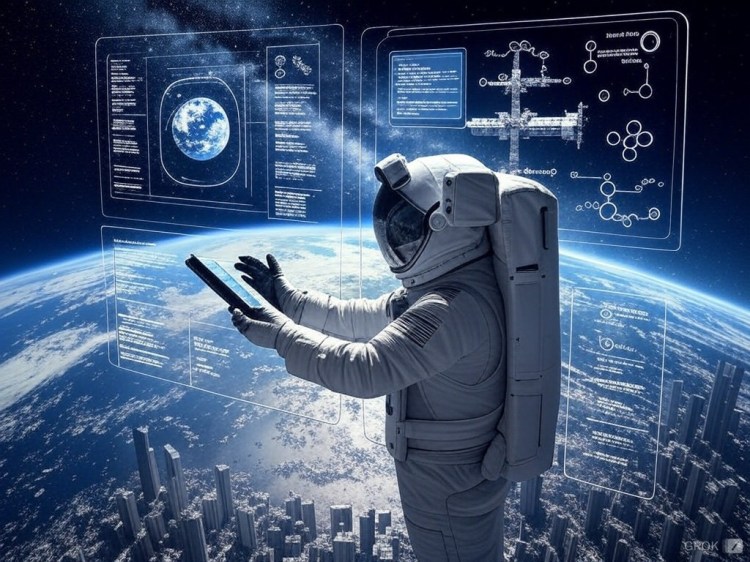
Bridging Space and Earth: The Future of Technology Transfer. Image generated by xAI’s Grok AI model
Listen to Technologic by Daft Punk to enjoy reading this post fully.
“Space is hard” is the most common sentence echoed when something doesn’t go as planned in a space-related activity. It means reaching space and working there is tough, and failure is sometimes inevitable. However, scientists and engineers put a lot of knowledge, effort, and creativity into overcoming the countless problems they encounter on every space mission.
They invent new solutions and technologies to break through barriers and push the boundaries, resulting in a rapid and unusual development that could be impossible without such cosmic dares. On the other hand, the public is spending a lot of tax money to allow this magic to occur.
What has happened to all the intellectual property generated so far? Are those scientific and technological advancements confined to the space arena and the tax money lost in space?
Luckily for all of us, the answer is no, they aren’t. They are constantly shared with the “non-space” industries, enabling them to generate new wealth from that initial investment.
In order to do that, space agencies like NASA and ESA launched specific technology transfer programs, aimed to bring indirect benefits from space to the ground (see NASA Technology Transfer Program, ESA Technology Transfer).
The mechanism of these programs is quite easy. First, a new technology is invented to overcome a limit imposed by the harsh space environment while trying to perform a specific activity. Once the technology is tested and working as expected, the related intellectual property is disclosed to the public through dedicated websites or communication channels. If companies and entrepreneurs find an interesting technology to enhance one of their products or to make a new one, they could sign an agreement with the space agency to license its use.
Space agencies also manage special business incubators that support new start-up enterprises aiming to bring space technology to the “standard” economy like ESA Business Incubation.
What does it mean concretely Technology transfer? Let’s look at some practical examples.
Do you like your mobile phone camera? Are you having fun creating HD videos with your Go-Pro? You need to know that they would not work without their CMOS image sensors. This technology was developed at NASA Jet Propulsion Laboratory (NASA JPL) to equip spacecraft with new high-resolution cameras.
How many times have you measured your temperature with an infrared thermometer? In the early Nineties, the company Diatek Corporation partnered with NASA JPL to produce this new kind of thermometer, adapting infrared sensors developed to measure the temperature of stars. So, not only you are made of stars, but also your temperature is measured like that of the stars!
What about something more spacepolitan? For more than twenty years, the ESA-led Micro-Ecological Life Support System Alternative program, better known as MELiSSA, has been studying how to sustain astronauts during long missions in space. The program aims to develop a closed life-support system, processing waste to deliver oxygen, water, and food. One of the most promising technologies developed so far is a special filtering system for water, capable of removing many pollutants, including nitrates. Thanks to its partnership with MELiSSA, the French company Firmus built a water purification station. They tested it for a school in Morocco in the village of Sidi Taïbi, near Rabat. The population of this town was growing rapidly and providing fresh water for everyone was a big issue, since the groundwater was rich in nitrates, unsuitable for human consumption. Thanks to this test station, the school could use filtered groundwater to provide fresh water to students and teachers, and the company gained valuable experience while developing the product. Which UN Sustainable Development Goal is supported by this technology transfer? Of course, SDG 6 Clean Water and Sanitation!
There are plenty more “spin-off” initiatives, some not so striking, but equally important, and others in development, landing on the ground soon. Do you want to know more? Look at the websites developed by NASA and ESA to take into account all the “spin-offs” made so far: NASA Spinoff and ESA Downstream Gateway.
As Dr. Geoffrey Nicholson (3M chemist, inventor of the Post-It Notes) said, “Research is the transformation of money into knowledge; innovation (technology transfer) is the transformation of knowledge into money”. Hence, space exploration not only offers direct benefits to Humanity, but also provides a positive cross-impact on the normal economy, helping it to be more efficient, to consume fewer resources, and finally to improve our daily life: investing in space is investing in our future!!
 Becoming Spacepolitans