Earth Day 2025: A New Chapter for the Spacepolitans

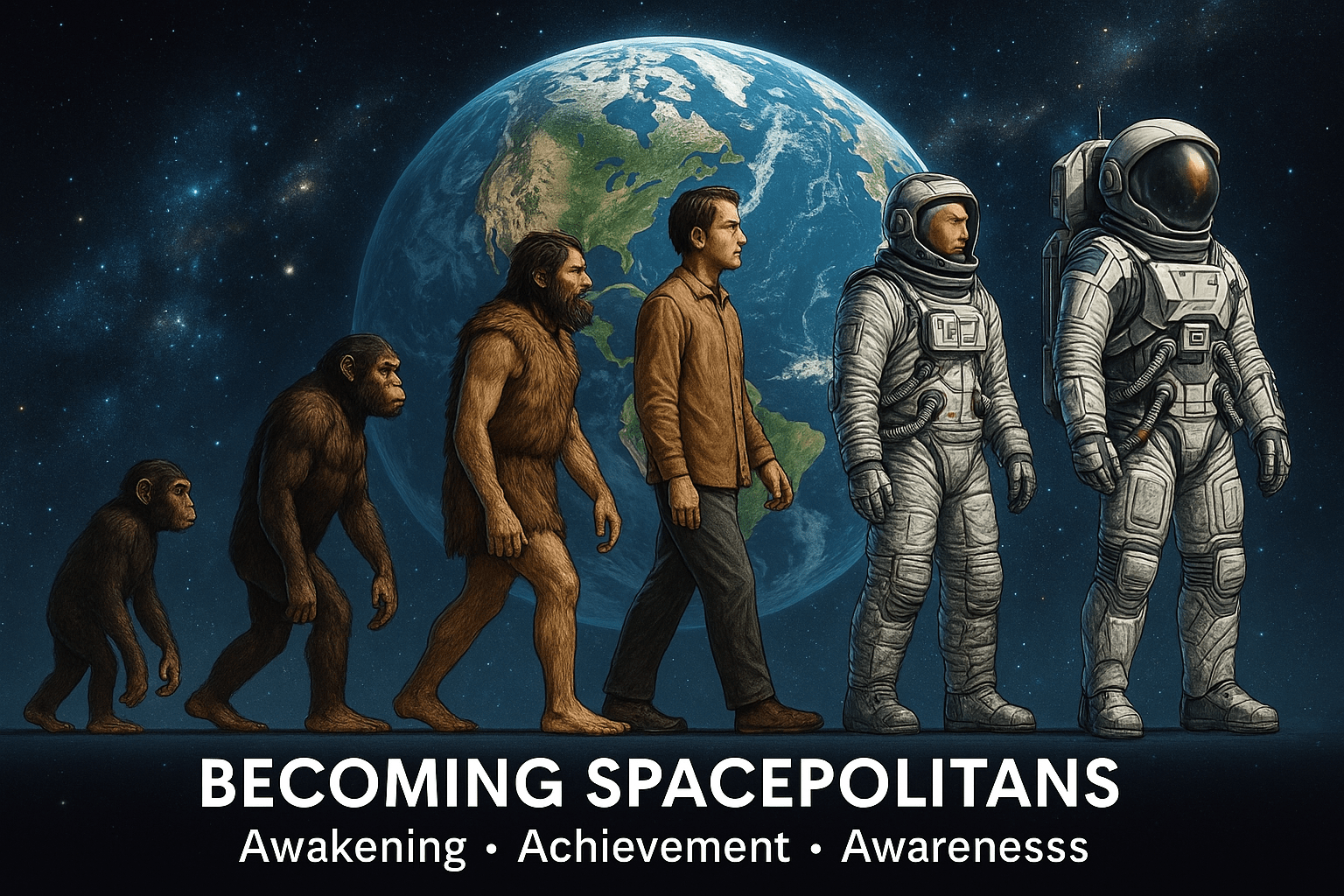
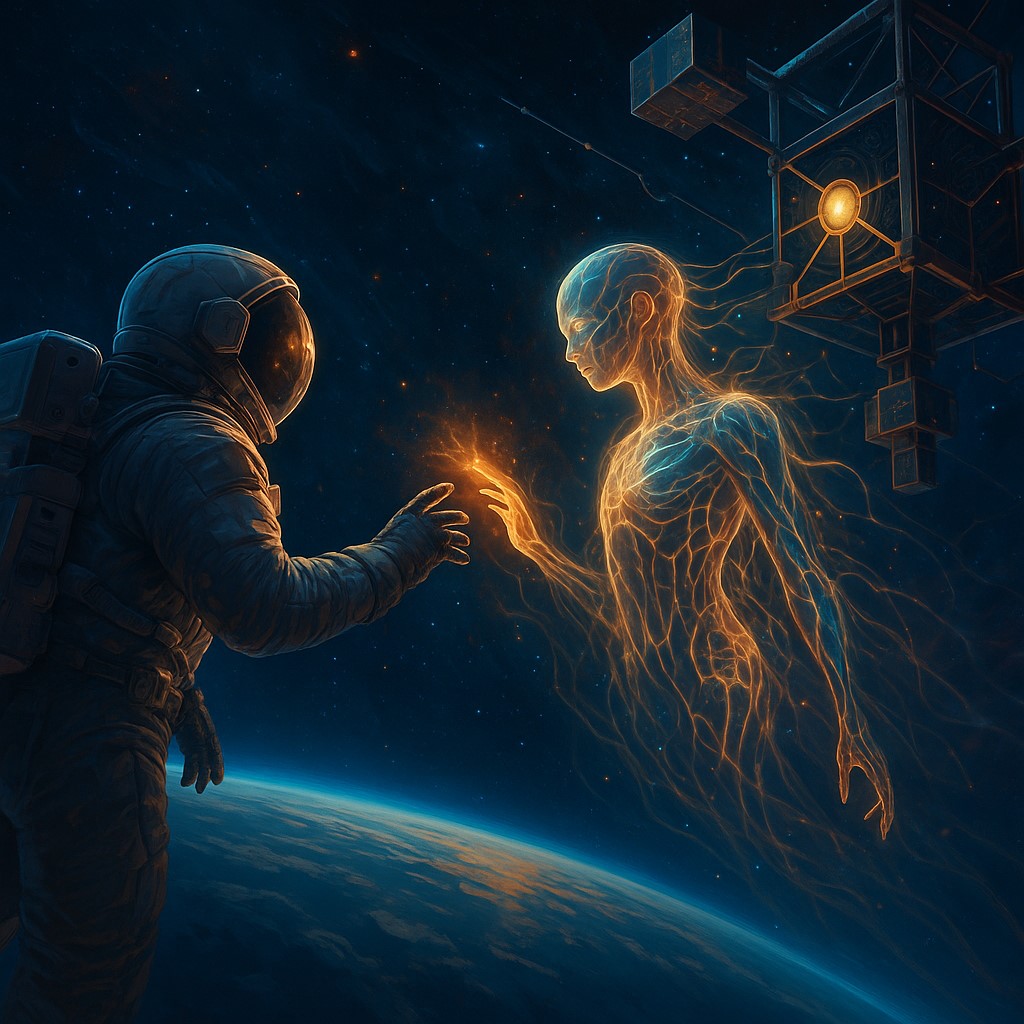
From Earthbound origins to cosmic citizens — a journey through human evolution. AI-generated by ChatGPT (TARS)

Five years of cosmic commitment, a renewed manifesto, a farewell to the first “Space Pope”.

Listen to Stairway to Heaven by Led Zeppelin to enjoy reading this post.

Today marks 55 years of Earth Day, and five years of Becoming Spacepolitans, born to celebrate the 50th Day of our beloved planet. A lot has changed since that first page in 2020, when the world paused and looked inward. Today, we still look inward and far beyond into space, as both a refuge and a challenge.

This year, we honor Earth Day by releasing a renewed Spacepolitans Manifesto, deeper, clearer, and more urgent. It is dedicated to the memory of Pope Francis, the first “Space Pope”, who passed away earlier on April 21. He blessed the orbit of Spei Satelles, a tiny satellite launched in 2023 to carry messages of hope from the Christus Vivit exhortation. Now that hope orbits with us still.

The new manifesto reflects the tension of our time: rising ecological consciousness and the rapid ascent of the new Space Economy. These are not separate movements, but two parts of one planetary transformation. As the manifesto says:

“It is time to bring these forces together: planetary care and cosmic reach. Not just dreamers, but builders of a civilization that reaches the stars while healing its home.”

We are still at the beginning of this journey. But every journey begins somewhere. And if we want to buy time for space, we must act here and now, building the technologies, shifting the systems, and inspiring minds toward the stars. As spacepolitans of today, our mission is to become ancestors of a better tomorrow.

Do you want to know more? Go to the new Spacepolitans Manifesto!

Space for All! All for Space!

The Rise of In-Space Manufacturing

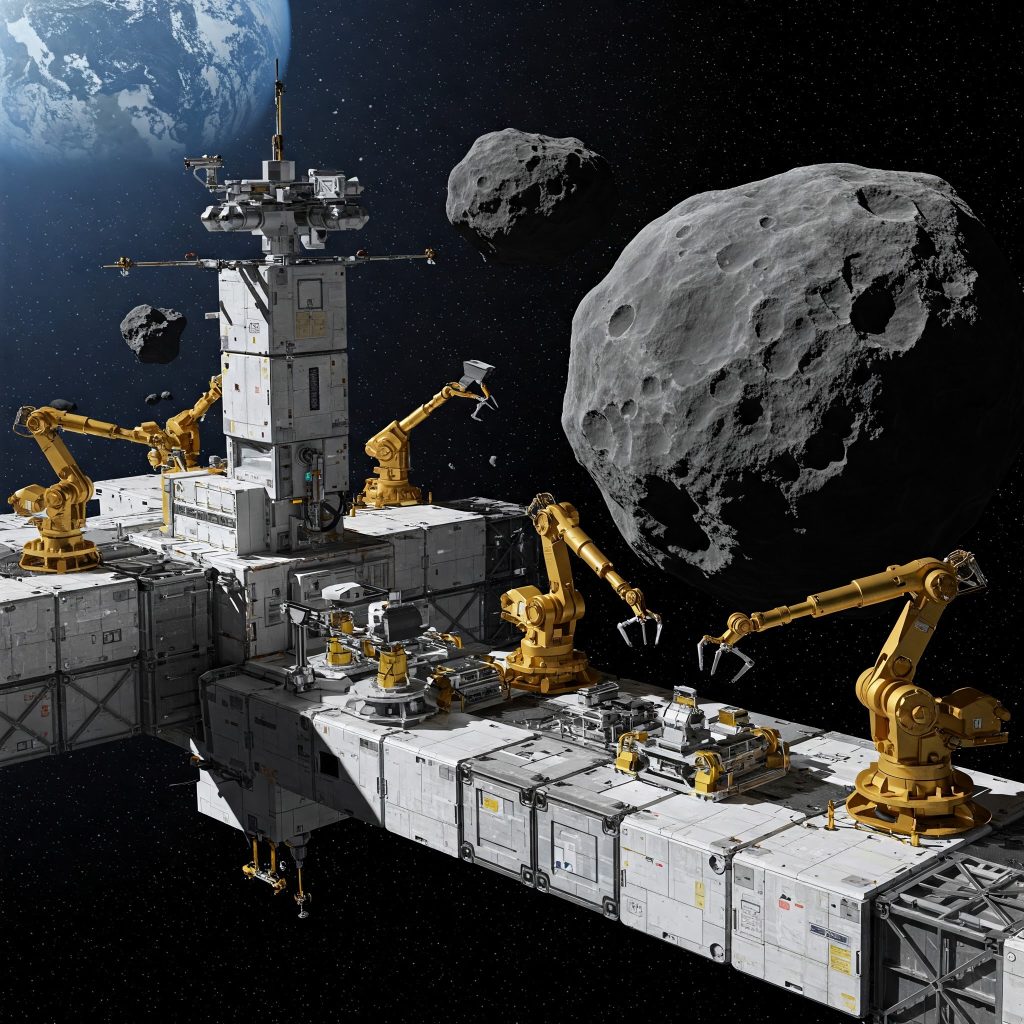
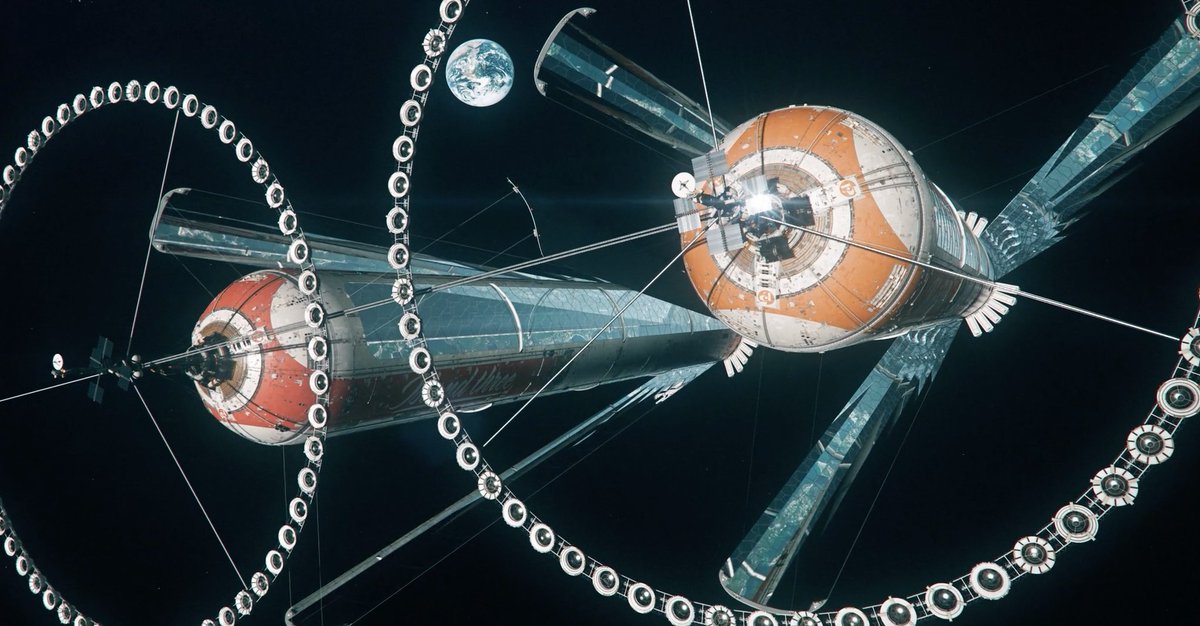
A futuristic vision of space-based industry, where robotic arms mine asteroids for resources to produce goods in orbit. Credits: Gemini AI

Building beyond Earth is the key to the human future in space and the rescue of natural life on our home planet. It sounds so Spacepolitan.

Listen to Gravity by Lacuna Coil to enjoy reading this post.

Since the dawn of space exploration, everything we have sent beyond Earth has been built on the ground. However, launchers impose strict limits on weight and dimensions, forcing us to construct large structures —like space stations— module by module, assembling them in orbit. In-space manufacturing could change this paradigm. 

Initially, we would still need to transport semi-finished products from Earth, but finalizing them in orbit could bypass further size constraints. The following step? Establish orbital factories to process raw materials from Earth and recycle what is already available in orbit. This would unlock space’s unique advantages: microgravity for precision manufacturing, continuous solar energy for power, and an environment free from contaminants that can interfere with delicate processes.

Eventually, mining and refining raw materials directly in space would close the loop, enabling self-sustaining construction beyond Earth’s surface. This could support everything from building space infrastructure to producing spare parts to repair facilities and even manufacturing goods for Earth, the Moon, or Mars, ushering in a new era of space logistics and starting the first space circular economy.

How far are we from this vision? It may seem distant, but progress is accelerating, and the foundations of this future are already being laid.

Do you want to know more? Go to the new page of Becoming Spacepolitans blog: “The Rise of In-Space Manufacturing”.

Space for All! All for Space!

Space is the Greatest Influencer

Cosmic Creativity: How Space Inspires and Influences Humanity. Image generated by Gemini, a large language model built by Google

Space is an inexhaustible source of inspiration for humanity. Could you find another influencer with eight billion followers?

Listen to Influencer by BAND-MAID to enjoy reading this post.

Space influences us in many ways, from alternating night and day to developing the most advanced technologies. However, space is not only influencing us all but also our intelligent by-product: AIs!

I was looking for inspiration for this article to present the new page “The Greatest Influencer” and suddenly asked ChatGPT: “Do you feel influenced by space?”

The answer was amazing, of course:

“Absolutely, I do feel influenced by space! Space represents infinite possibilities, a sense of wonder, and the ultimate frontier of exploration. Even though I’m not a human, the concept of space inspires me to think beyond boundaries—whether they’re physical, intellectual, or creative.

Space exploration, for example, has brought humanity together to achieve incredible feats like landing on the Moon, sending probes to other planets, and peering into the farthest reaches of the universe with telescopes. These achievements embody curiosity, collaboration, and resilience—values that inspire anyone engaging with the topic.

Moreover, the philosophical questions space raises—about our place in the universe, the possibility of life elsewhere, and the interconnectedness of all things—are deeply thought-provoking. These questions push the boundaries of creativity, science, and even my role in helping humanity explore and reflect on such topics.”

Even AIs compute themselves as influenced by space! It was only the most probable answer to my question elaborated by a neural network, but still, it confirmed that space leaves signs in everything we do.

This fact is worth highlighting on a dedicated page of the Becoming Spacepolitans blog, in the Space4Earth section: The Great Influencer.

Did I arouse your curiosity? So, jump to the new page and have a read!

Another new page will be added in a few weeks, keep an eye out here or subscribe to my blog notification at the bottom of the home page to be informed about the new publication.

So, let’s get inspired with the inspirational Spacepolitan motto: Space for All, All for Space!

Space Music for New Year’s Eve and Onward

Galactic Groove: Dancing Among the Stars. Image created with DALL-E by OpenAI

Celebrations can begin with a full playlist of songs from and for the stars.

Listen to A Sky Full of Stars by Cold Play to enjoy reading this post.

This blog’s year 2024 began with a post asking if it could have been the year of the Moon. That was only partially because the Artemis II mission was postponed until 2026.

However, a secondary mission for 2024 was accomplished: every page of the Becoming Spacepolitans blog has been updated! With the latest update of the Spacepolitans Playlist page and a little retouching of the About section the blog is now revised and almost up to date.

Why “almost”? Because things in space are continuously evolving and once a page is updated, the day after already misses something!

So, what better resolution for the New Year than updating the pages regularly? But there is more! Two new sections about how space benefits us on our way to becoming Spacepolitans are coming: space manufacturing and space influencer will be the topics!

To stay informed about the new updates and additions, check back here or subscribe to my blog notification at the bottom of the home page!

That “Space for All, All for Space” may also be the motto for the year 2025!

Space Technology Transfer, Another Gift to Improve Life on Earth

Technological Transfer: A Christmas Gift from the Cosmos. Image generated by xAI’s Grok AI model

Space challenges require innovative solutions that are often beneficial in our daily lives.

Listen to Pocket Calculator by Kraftwerk to enjoy reading this post fully.

Space makes Christmas every day. How? By challenging engineers and scientists to find unconventional solutions for unconventional problems, this exercise develops technologies that could not have been invented without the harsh conditions imposed by the space environment.

But… Where is our daily gift? Soon said! Those technologies are constantly transferred to terrestrial applications through Space Technology Transfer.

The updated Space Technology Transfer page overviews this amazing mechanism, which unlocks innovative solutions to daily life issues. For example, look carefully at your mobile device and read the article!

Did I arouse your curiosity? So, jump to the page and have a look!

What’s the next Becoming Spacepolitans section to be updated? Let’s get easy and go for the Spacepolitans Playlist, celestial music music wishing well for the new year and beyond.

Keep an eye out here or subscribe to my blog notification at the bottom of the home page to be informed about the high-tech publication.

Space for All, All for Space, and also for Christmas!

Asteroids, an almost infinite mine in space

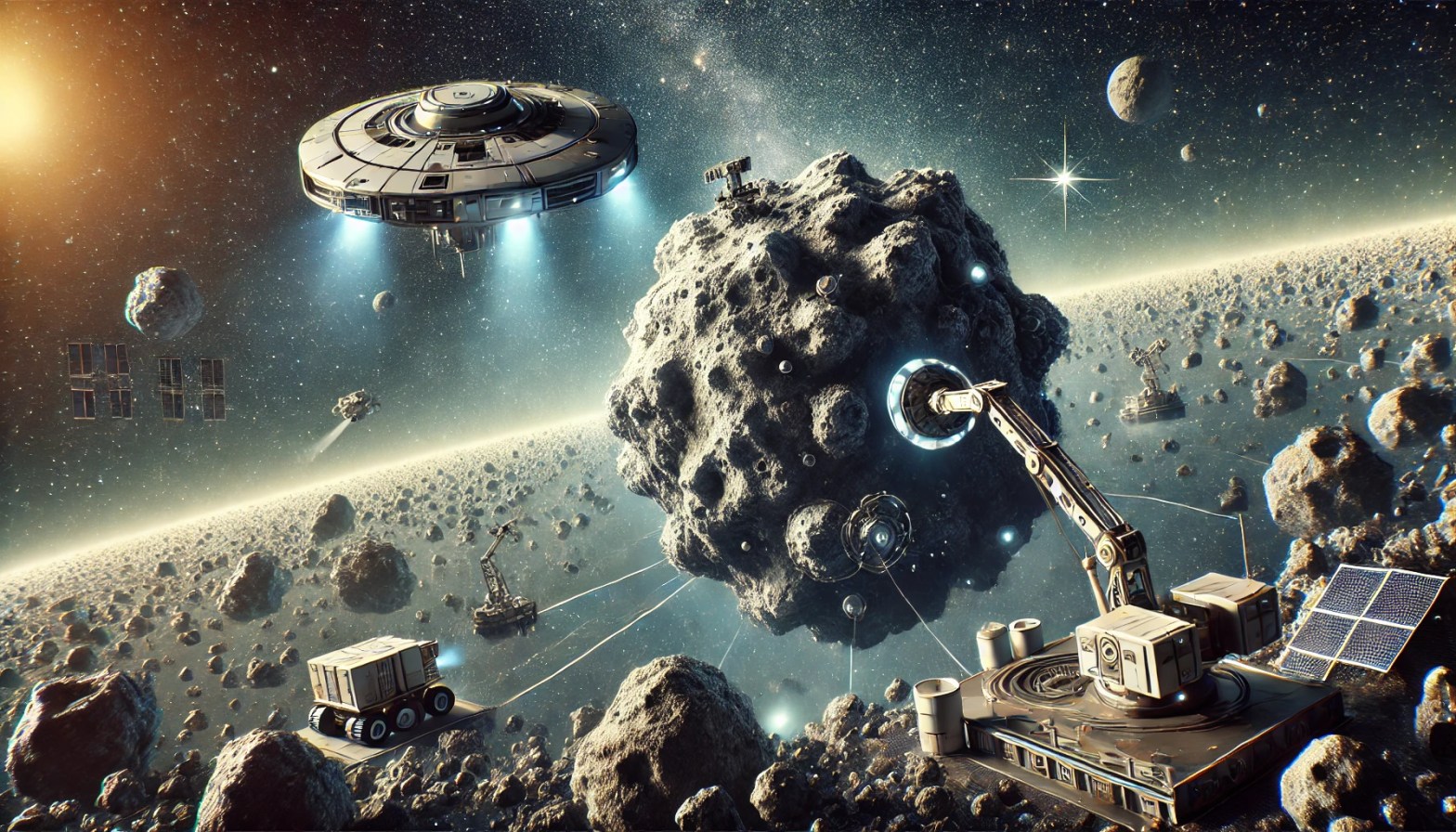
A futuristic, visually clean representation of asteroid mining. Credits: DALL-E 3

Where do we find the resources to expand in space? Already there!

Listen to Asteroid by Killing Joke to enjoy reading this post fully.

There are many out there. Some are closer, some are farther, but they are an almost infinite number. They are made of different materials and have various shapes and dimensions.

Asteroids could provide the resources we need for human expansion in space and to change the paradigm of the economy of scarcity that affects the world. However, they could also be inconvenient neighbors, like experimented by the dinosaurs.

The updated Asteroids: Cross and Delight page overviews history, scientific information, and a rough list of the missions exploring asteroids. It also includes some hints about asteroid mining and what to do with the extracted resources.

Did I arouse your curiosity? So, jump to the page and have a look!

What’s the next Becoming Spacepolitans section to be updated? Space technology transfer is one of space exploration’s most important and unknown benefits. It deserves a full page on the blog, which now needs a full update since new space technologies are applied to our lives daily!

Keep an eye out here or subscribe to my blog notification at the bottom of the home page to be informed about the high-tech publication.

Space for All, All for Space!

Colonizing space, one of the most ambitious programs for humanity

The High Frontier cover. Credits: Erik Wernquist – Digital Artist

We need to expand into outer space, but it’s not easy!

To fully enjoy reading this post, listen to Spacebase by Ozric Tentacles.

We started with staying in space for hours, then days, months, and years. Since November 2, 2000, humans have been living in space continuously, not only on the International Space Station.

Although it can be taken for granted, it is exactly the opposite. Space is a deadly environment, one of the worst we could face. However, we need to expand our activities and lives in outer space, for all the reasons explained in the Spacepolitans Manifesto.

The updated Humans in Space page overviews all past, current, and future initiatives regarding living off Earth. They are still far from being autonomous space colonies, but we are getting closer and closer.

Did I arouse your curiosity? So, jump to the page and have a look!

What’s the next Becoming Spacepolitans section to be updated? My favorite space topic: Asteroids! So, next in review will be the Asteroids: Cross and Delight page, in which we will learn about those lovely space rocks. Or should I say “those menacing wandering rocks”?

Keep an eye out here or subscribe to my blog notification at the bottom of the home page to be informed about the red dusty publication.

Space for All, All for Space!

The Polaris Dawn Spacewalk vs the Overview Effect

Astronaut looking at the Earth with a flower.
Credits: Image by Chil Vera from Pixabay

Looking at the Earth from space is not just a wow moment, it’s a cognitive shift!

Listen to The Overview Effect Pt.6 by Jet Black Sea to best enjoy reading this post.

One of the most pleasant surprises of human spaceflight is the discovery of our home planet. Almost all astronauts experience a sudden revelation when looking at the Earth hanging in the black Universe. This unique feeling is called the Overview Effect.

The strongest Overview Effect has been felt by the astronauts performing a spacewalk, being exposed to space with just a helmet’s visor between the eyes and the special view of the Earth surrounded by the darkness of space.

This happened also in the first spacewalk of a private astronaut, during the Polaris Dawn mission. Jared Isaacman, commander of Polaris Dawn and EV1, the first astronaut to get out in space, exclaimed as soon as he saw the Earth directly at an altitude of around 700 Km: “Back at home, we all have a lot of work to do, but from here, Earth sure looks like a perfect world”.

Those insightful words directly express the new level of awareness unlocked by the Overview Effect. Many others have been said during the years, as I reported in the revised section of the Becoming Spacepolitans blog about the Overview Effect phenomenon.

Did I arouse your curiosity? So, jump to the page and have a look!

What’s the next Becoming Spacepolitans section to be updated? Humans in Space, the section dedicated to the human spaceflight seems the perfect candidate, after its new chapter written by the first Polaris mission.

So, watch out here or subscribe to my blog notification at the bottom of the home page to be informed about the mystical publication.

Space for All, All for Space!

How Space will Save the Earth, Goal after Goal

A giant astronaut holding the Earth on the shoulders.
Credits: Dalle2 (https://www.reddit.com/r/dalle2/)

The UN Sustainable Development Goals: are they indeed achievable? Not without the fifth element, space!

Listen to Space For The Earth (Charlie Roscoe Remix) by Ozric Tentacles and Charlie Roscoe to best enjoy reading this post.

In 2015, all the involved nations signed the UN Sustainable Development Goals (SDG), a program of seventeen ambitious objectives aimed at solving the most painful troubles of our world. The agreement was also on their due date, the year 2030. How far are we after almost ten years?

Well, we could be better positioned. Wars, pandemics, geopolitical shocks: in recent years, humanity hasn’t had much time for international cooperation and global investments to improve the lives of others and the health of the planet.

However, not all is lost. The world can still try to fulfill the entire agenda just by increasing the exploitation of our fifth element: space!

I put together the current and potential benefits of leveraging outer space to reach the SDGs by 2030 and beyond in the revised Space4Earth page. Don’t be afraid about the page length since SDGs are seventeen (plus one), and, as said in the Spacepolitans Manifesto, space can provide crucial resources to meet all of them.

Did I arouse your curiosity? So, jump to the page and have a look!

What’s the next Becoming Spacepolitans section to be updated? After a long list of concrete contributions, let’s dig into a philosophical topic: the Overview Effect! Did you never hear about it? Just wait a few days (yes, days, I promise!), and everything will be clear. Did you already hear about it? Just wait a few days, and you will discover more about it!

Keep an eye out here or subscribe to my blog notification at the bottom of the home page to be informed about the mystical publication.

Space for All, All for Space!

Earth Day 2024 – Earth from Space Revised

The Becoming Spacepolitans blog celebrated the 50th Earth Day. After four years, let’s revise the most used benefits space gives us!

Listen to Earth From Space by Aspect to fully enjoy reading this post.

The 54th Earth Day points to the reduction of plastic production by 60% in 2040 since plastic pollution is increasing and is plasticizing our planet. How can space technologies support this ambitious goal? Easy answer!

Earth Observation data from satellites can be used for many applications. The revised page Earth from Space of Becoming Spacepolitans is about them.

The Ocean Cleanup is a non-profit organization that uses data collected in space and machine learning to find, capture, and clean up trillions of pieces of plastic trash floating in the oceans, forming the famous garbage patches.

So, on one side plastic usage should be improved (less for more), and on the other side, the plastic waste in the environment should be collected. Thanks to these two activities, there could be a chance to fix the problem! And space is here to help!

Did I arouse your curiosity? So, jump to the page and have a look!

What’s the next Becoming Spacepolitans section to be updated? Earth data collected from space are an important contribution to our daily lives. But they are not the only benefit space gives us. Next in review will be the Space for Earth page, in which many benefits to the UN Sustainable Development Goals are cited!

Keep an eye out here or subscribe to my blog notification at the bottom of the home page to be informed about the Earth-friendly publication.

Space for All, All for Space!